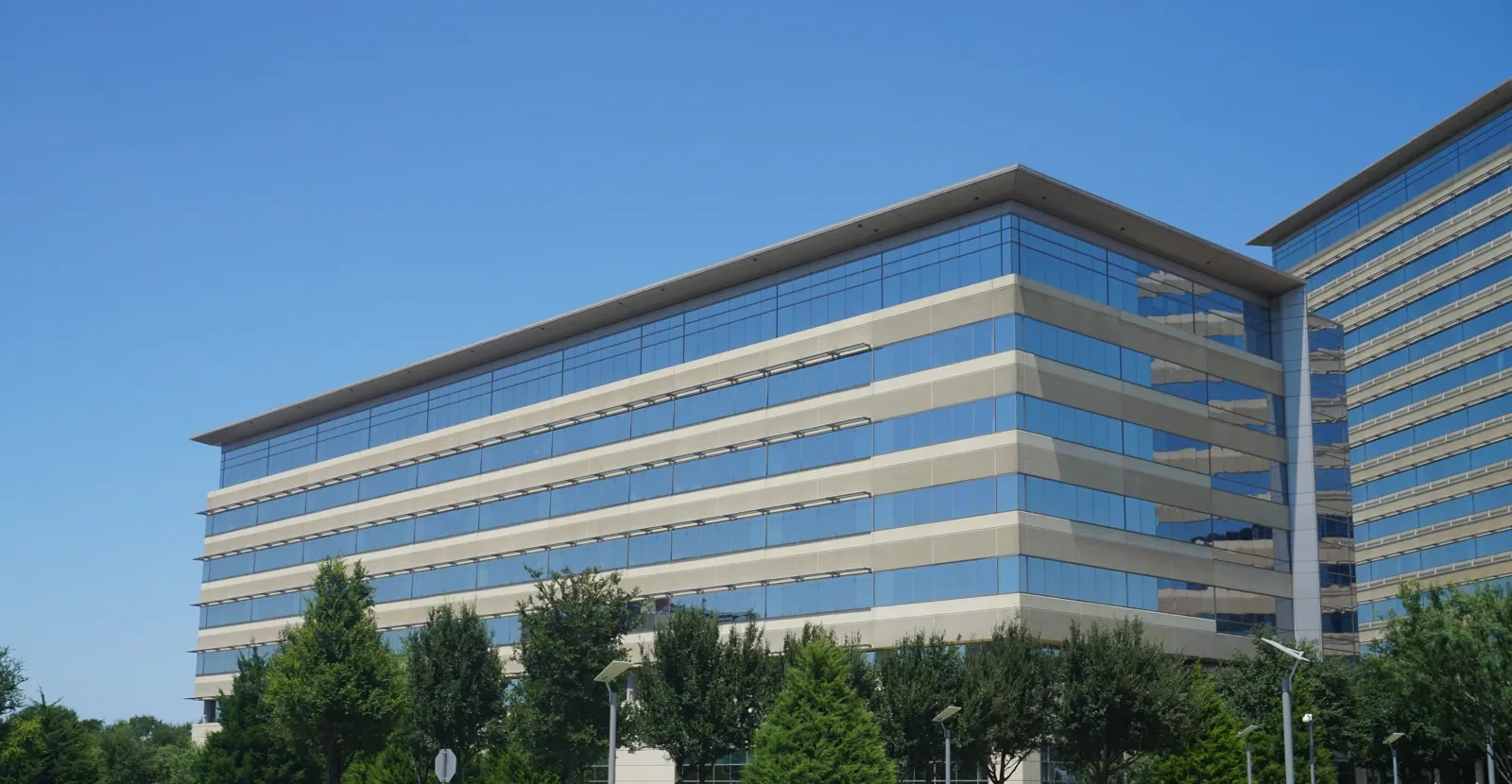
A dealership roof protects more than the showroom. Water can affect vehicles, service equipment, parts inventory, waiting areas, and the customer handoff process. We inspect the roof, map affected departments, and plan repairs or replacement around business hours in Richardson, TX. The estimate should distinguish the roof zone from the showroom or service area below and state how vehicles, staff, and customers are protected.
Request a Roof Assessment
All fields are required.
Auto Dealership Roofing in Richardson, TX
Fit the Roof Scope to Sales and Service Hours
Identify Which Dealership Functions Sit Below
We ask where water appeared and whether it affected the showroom, service drive, parts room, offices, or customer lounge. Then we inspect the roof above and nearby seams, drains, curbs, skylights, and earlier repairs. Water can travel across a deck before reaching a ceiling, so the stain may not be directly below the failure. A repair map helps management move vehicles or protect equipment only where the roof work requires it.
Service bays may continue operating while other areas are closed. We coordinate lift access, customer entrances, receiving, staff routes, and noisy work with the fixed-operations manager. A roof inspection can identify the material and document the condition before a larger project is priced. If a leak is active over a vehicle or electrical equipment, an emergency visit can contain water while the permanent scope is prepared.
Check Rooftop Equipment, Vents and Daylighting
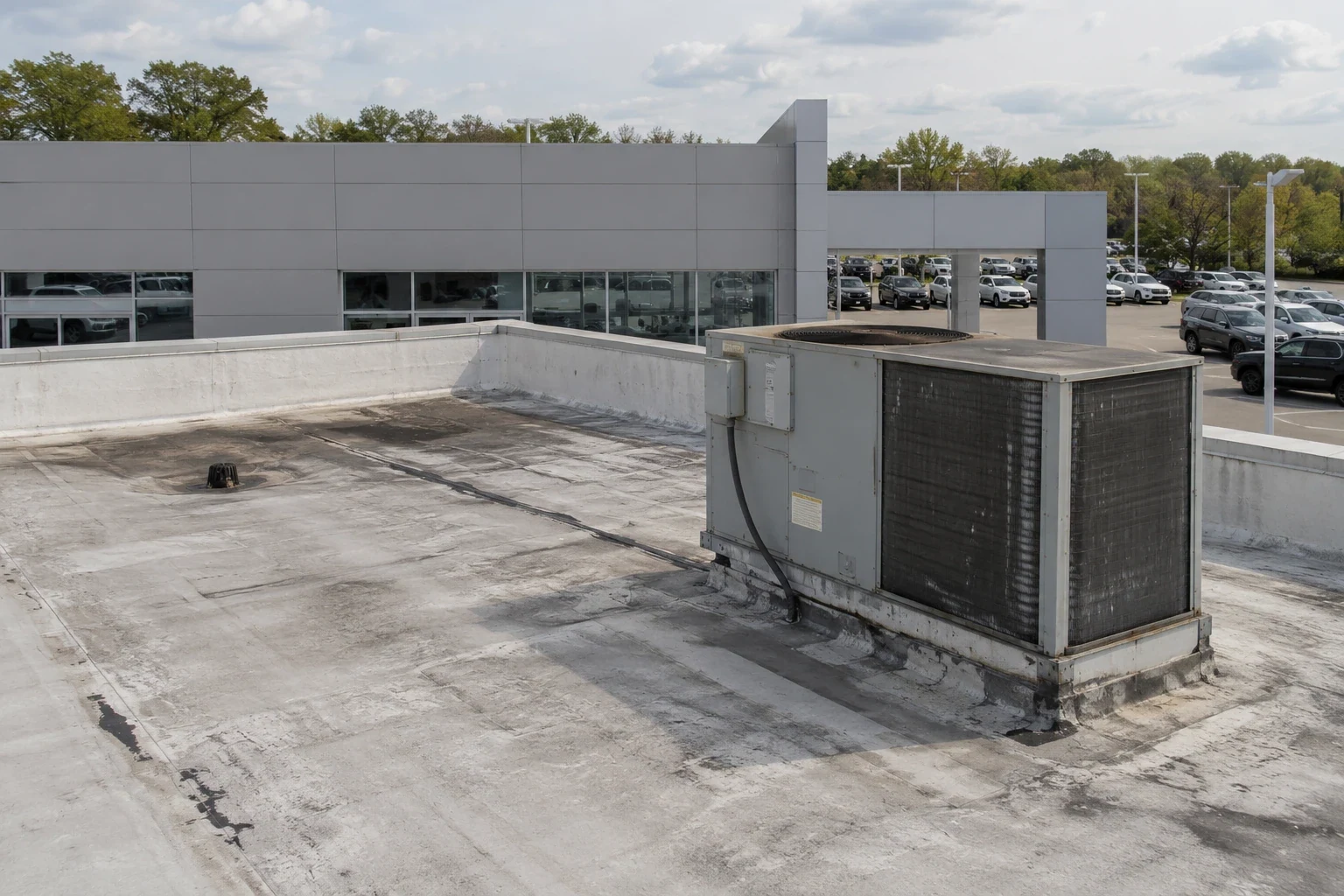
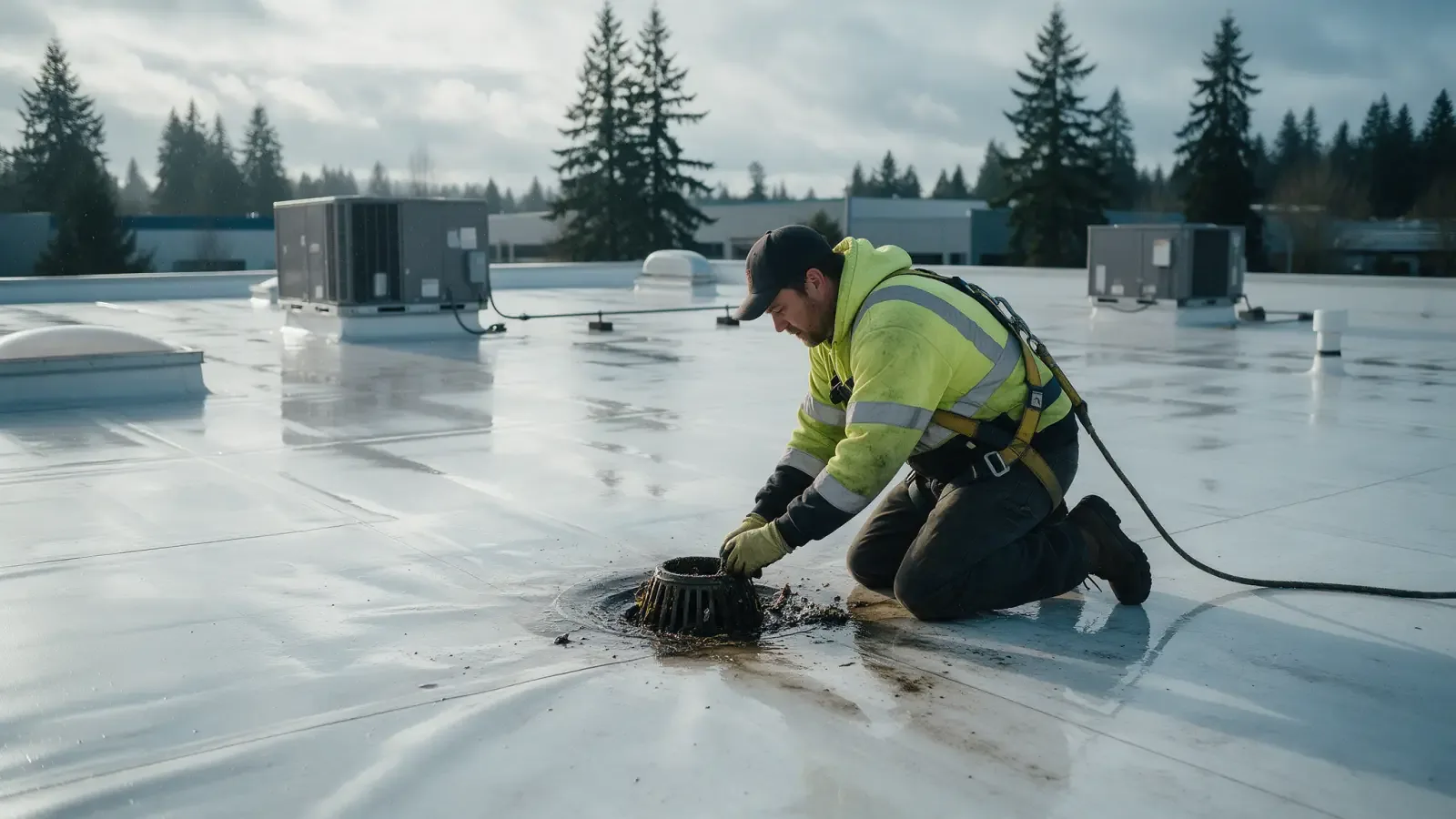
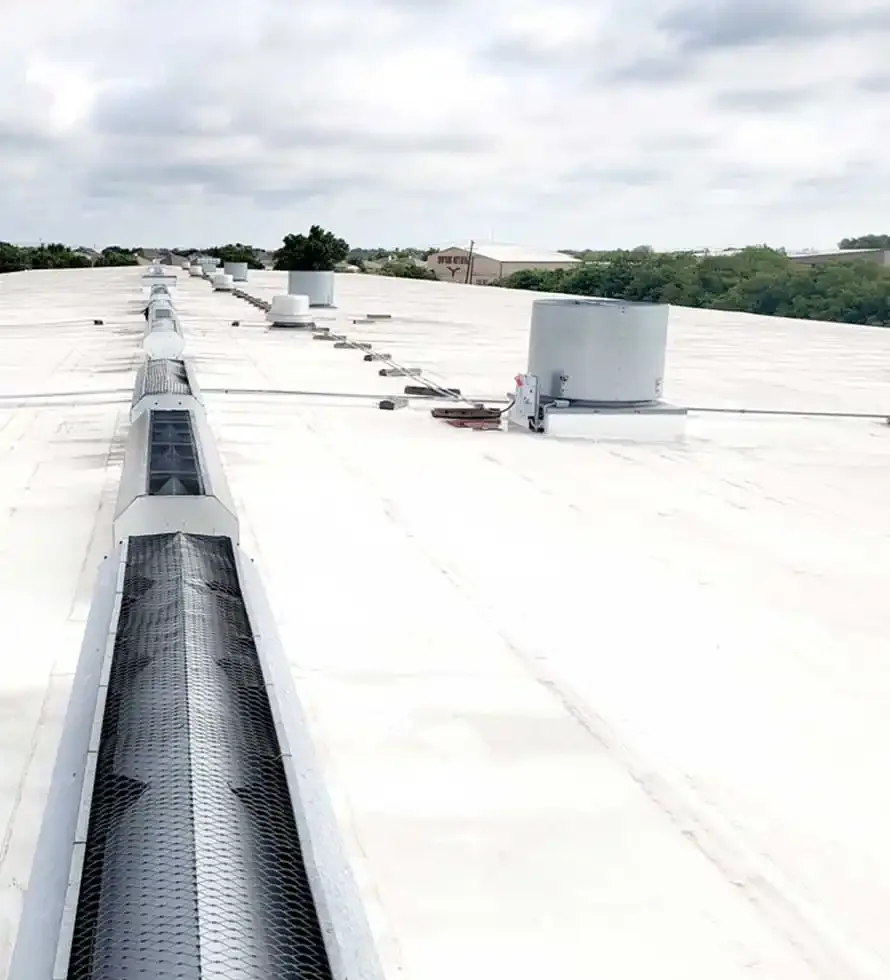
Dealership roofs can include HVAC units, exhaust fans, skylights, plumbing vents, signs, and communication equipment. We inspect flashing and support details at each opening. If a unit was moved or replaced, verify that the former curb was closed and that the new one is integrated with the membrane or metal roof. Daylight panels need attention where fasteners, seals, or flashing have loosened.
Service technicians may visit roof equipment during business hours, so identify their routes and any walkway protection. Tools, carts, and replacement parts can damage a membrane if staff use an unmarked path. A curb and support review can coordinate work with HVAC updates. Inspect nearby drains and overflows as well, especially where a curb redirects water. A drainage check can help keep a localized flashing repair from leaving water at the same spot.
Keep Showroom and Service Drive Access Clear
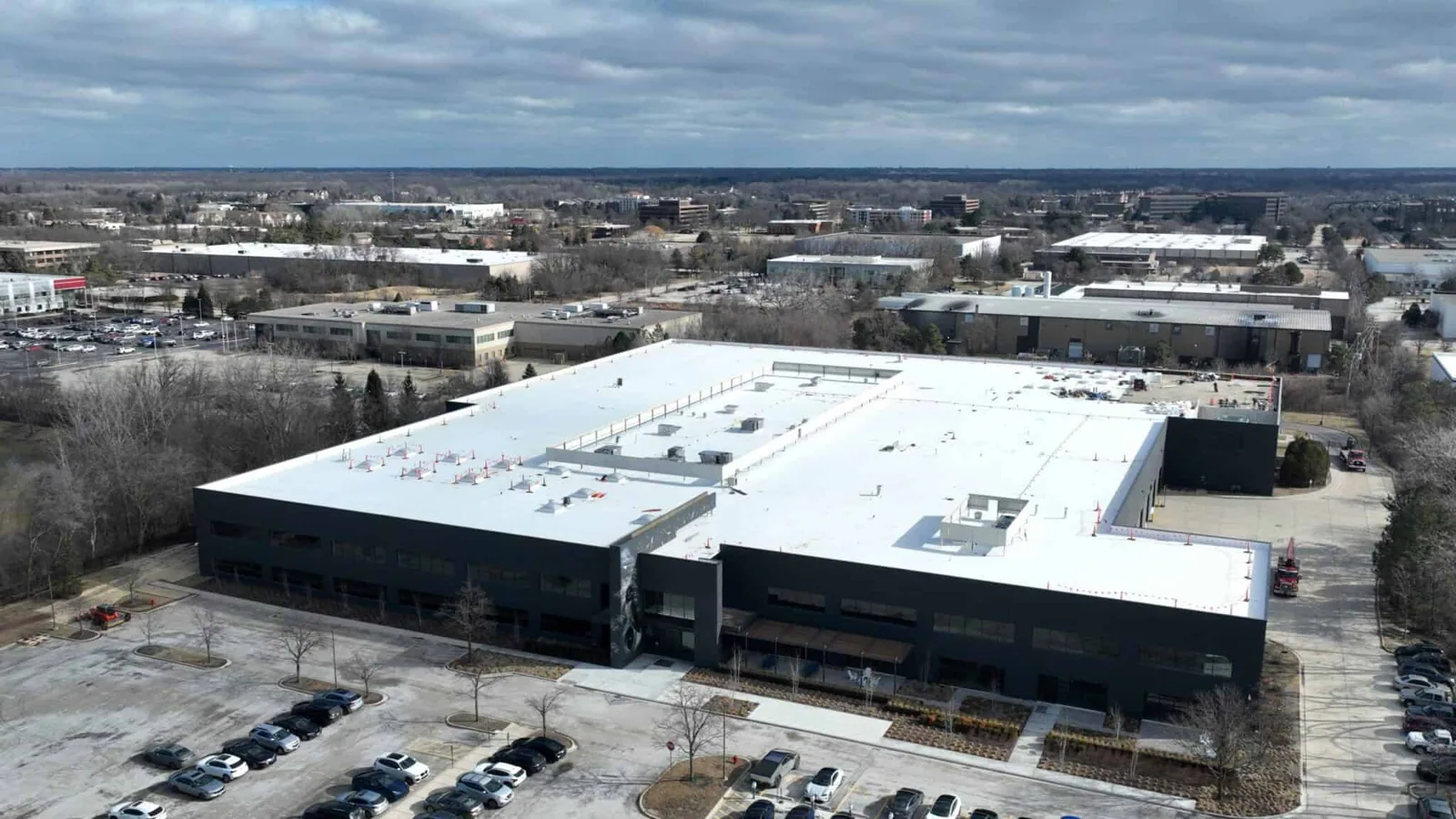
Material staging, lifts, and debris containers can compete with vehicle display, customer parking, and service pickup. We confirm loading routes and work-zone barriers before selecting a start date. If a crane or lift occupies a customer-facing area, the plan should identify how long it is needed and which spaces will remain open. After-hours work can reduce disruption, but it may change security, lighting, and labor assumptions.
Richardson Chinatown along Greenville Avenue has restaurants, markets, and other commercial activity. CityLine combines office, medical, retail, hotel, apartment, park, and civic uses. Those examples reflect active business districts, while the dealership's own customer and service flow determine its schedule. A dealership near CityLine still needs a site-level access review. A big-box retail roof plan may share customer-area controls, while a dealership has additional needs around vehicle storage and service operations.
Use the Right Repair for the Existing Roof
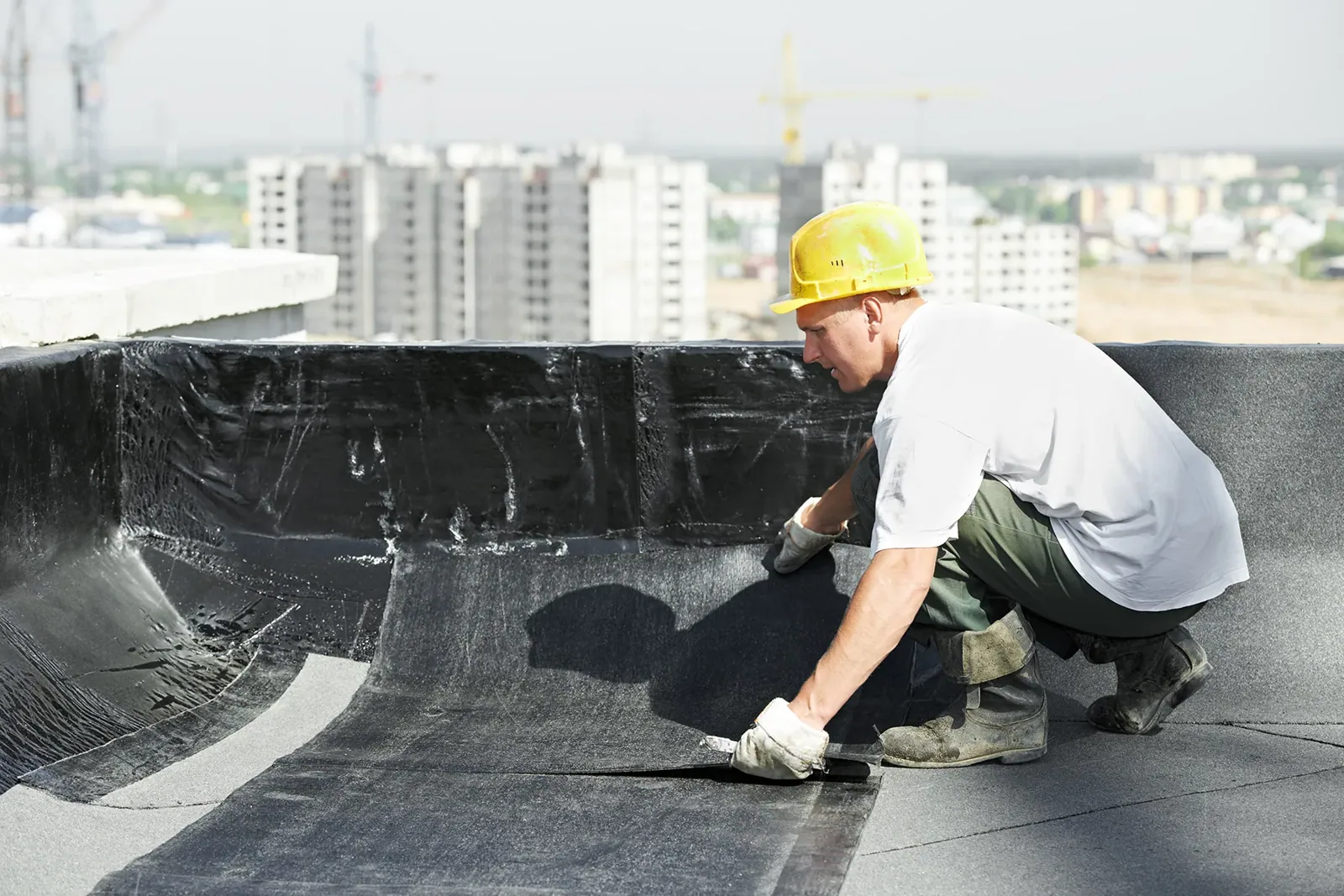
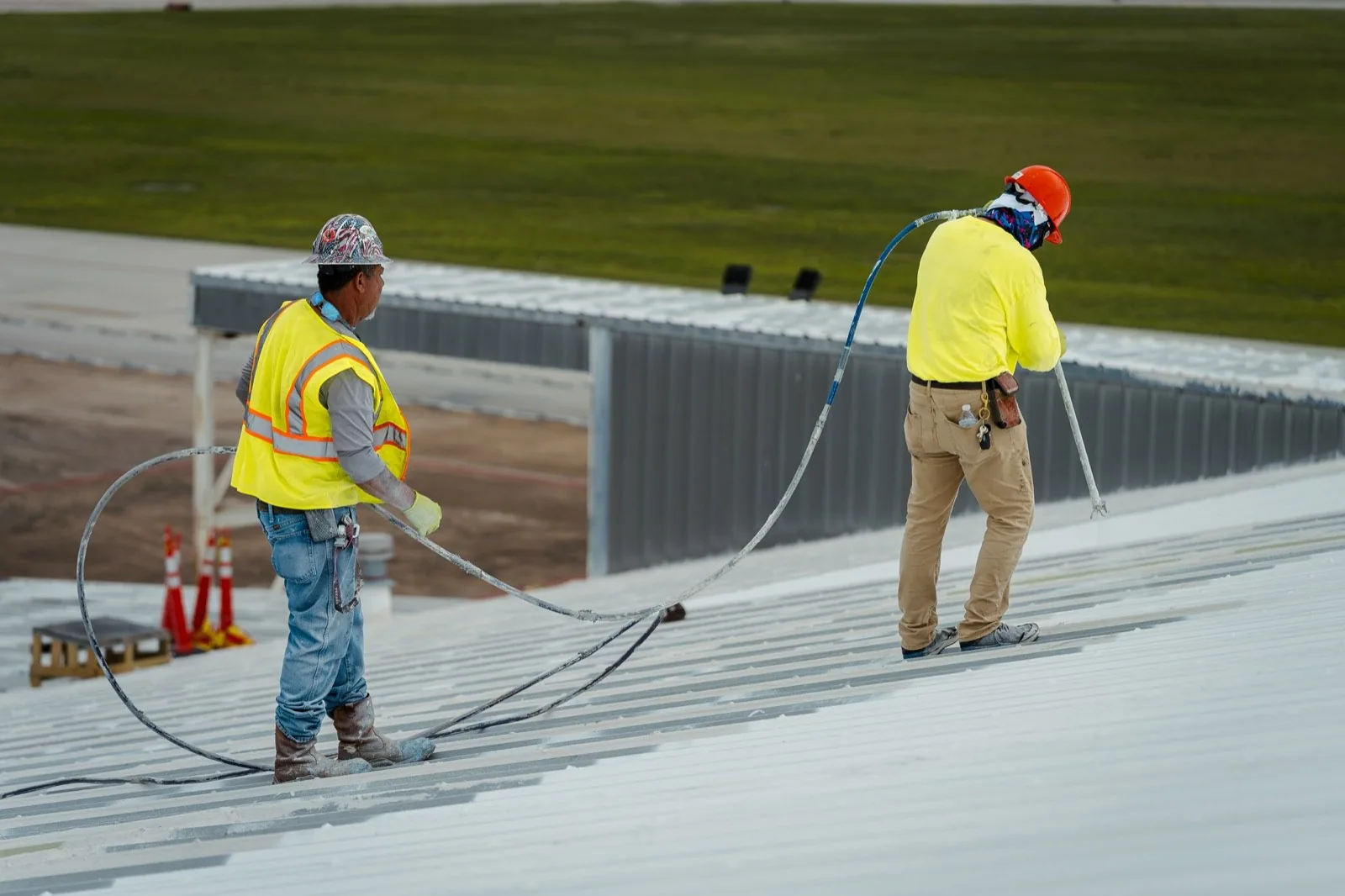
We identify whether the roof uses membrane, metal, or a coating system and check how its seams, attachment, insulation, and edges are performing. A localized curb repair can fit when adjoining material remains dry and secure. Repeated leaks or widespread wet insulation can make a larger scope more practical. The proposal should show the specific zone and repair materials, not a general allowance for dealership roofing.
Richardson's local code set includes 2021 building, existing-building, and energy provisions with amendments. We confirm the requirements based on repair, recover, or replacement. A replacement plan should list insulation, cover board, drainage, edge metal, skylights, and disposal. If a recover is being considered, verify moisture, attachment, and added height at curbs and service doors. Compare dealership needs with shopping-center roofing or warehouse roofing only where the roof assembly and operating schedule match.
Inspect After Richardson Heat and Storm Exposure
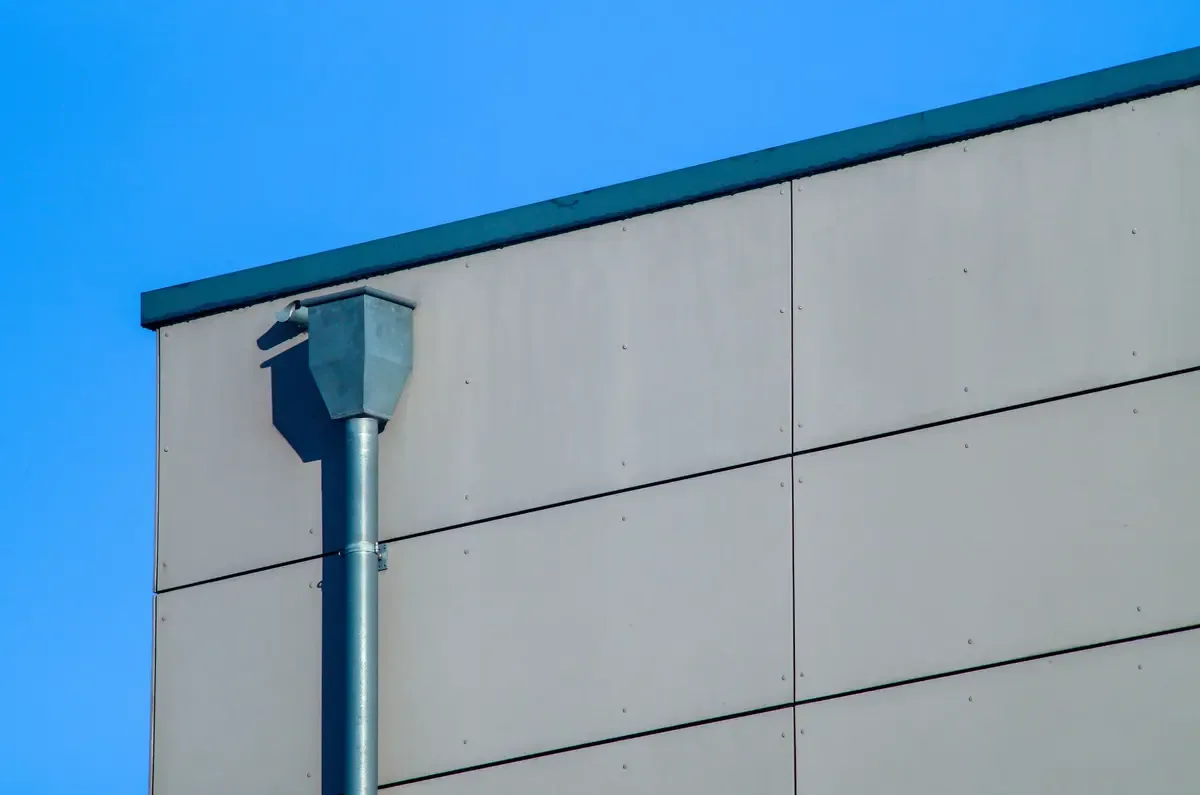
Richardson's July and August average daily highs exceed 95 degrees, while DFW spring is the most active thunderstorm period. Heat and storms can test flashing, seams, skylights, and roof edges. After a relevant event, we inspect the dealership for punctures, displaced metal, open details, and interior water rather than infer damage from a regional report. A roof record helps distinguish new impact from an earlier repair.
Tornado damage was documented near Audelia Road and Buckingham Road in Richardson in October 2019. That fact is local preparedness context; it does not establish damage at another dealership. If a storm report raises concern, keep photos of the affected department and roof zone. A storm assessment can document visible conditions. Protect customer vehicles and electrical areas first, then set a permanent repair scope with the dealer's operating team.
Schedule Work Around Sales and Service Peaks
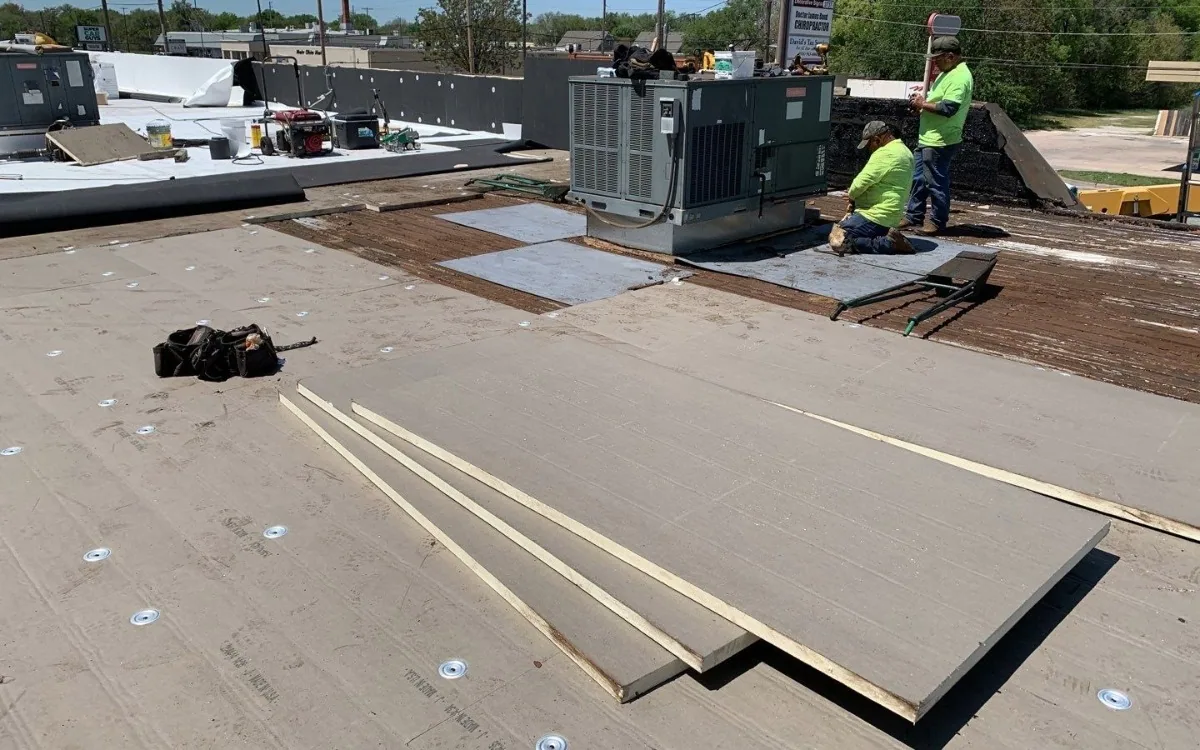
A reroof can be divided into sections so the service drive and customer areas remain usable. We identify which part of the roof opens each day, where vehicles need to move, and how the area is secured at close. The schedule should account for sales events, parts deliveries, service appointments, and any required lift or crane window. State how weather holds change the sequence and who receives the revised date.
If tear-off reveals wet insulation or deck damage, the crew pauses at a clear boundary while the owner reviews evidence and cost. Temporary protection should be included for the open section. The project contact should be able to approve a defined extension without interrupting service operations. Each phase should end with a secure roof and a clear route for employees and customers. We also coordinate with the parts department so scheduled deliveries do not arrive during a crane or debris-container move.
Keep a Roof Log with Equipment Changes
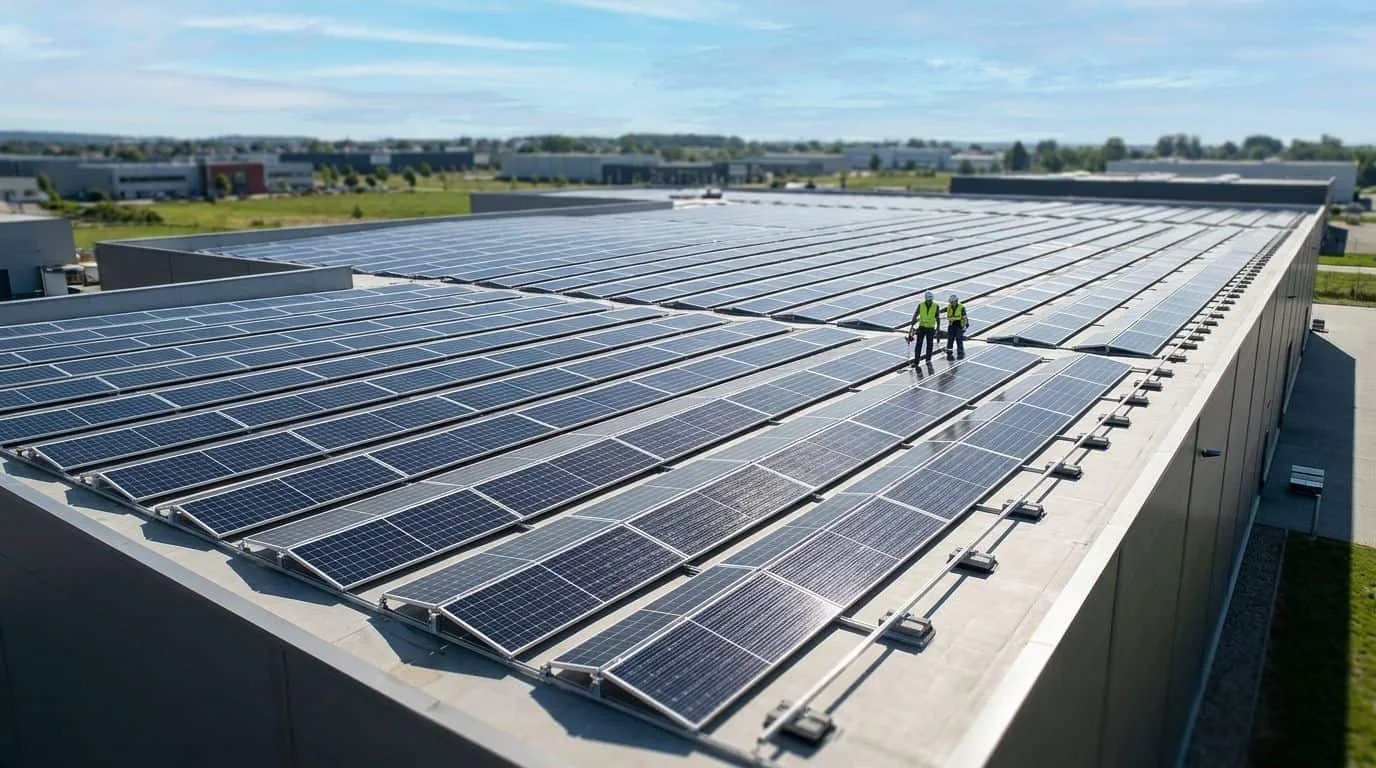
Record repairs by roof zone, including material, date, photos, drains, skylights, and equipment changes. Dealerships update signs, communications, ventilation, and service systems over time. The roof file should track those openings so the next contractor knows what was modified and whether the flashing was restored. When an interior report comes in, staff can compare the room with the prior repair record.
Richardson Innovation Quarter has manufacturers, technology firms, research, and education organizations; CityLine adds medical, retail, office, hotel, apartment, and public uses. Those local places show the range of commercial property conditions around Richardson. A dealership has its own access and sales calendar. A maintenance visit can inspect seams, curbs, skylights, drains, and service paths before routine wear affects customer space.
Related Roofing Work
Commercial Roof Inspection
Emergency Commercial Roof Repair
Rooftop Equipment Curb and Support Roofing
Commercial Roof Drain and Scupper Service
Questions About Auto Dealership Roofing
Can roofing work happen while dealership service bays stay open?
Often, through separate work zones and a schedule coordinated with service appointments, customer pickup, parts deliveries, and vehicle movement. We identify which routes must remain clear before staging equipment.
What should be protected during a dealership roof leak?
Identify vehicles, showroom equipment, service tools, parts, and customer areas below the reported water. We coordinate interior protection with staff and trace the roof condition before expanding the repair.
What should be inspected around dealership skylights?
Check glazing, frames, fasteners, flashing, adjacent membrane, and the drainage path. If a skylight is replaced, coordinate its curb and roof detail with the assembly work.
Can one roof zone be repaired without replacing the whole dealership roof?
Yes, if the defect is limited and the surrounding assembly remains sound. We inspect adjacent seams, insulation, and drainage, then show the repair boundary and any broader condition that needs testing.
What belongs in a dealership reroof proposal?
Include assembly, skylights, rooftop equipment, customer access, vehicle protection, staging, work hours, phase limits, and concealed-condition assumptions. The estimate should identify what areas stay open during each phase.
Fit the Roof Scope to Sales and Service Hours
Share the dealership schedule, vehicle-protection needs, leak map, and equipment plans. We will inspect the roof and prepare repair or replacement phases around operations.