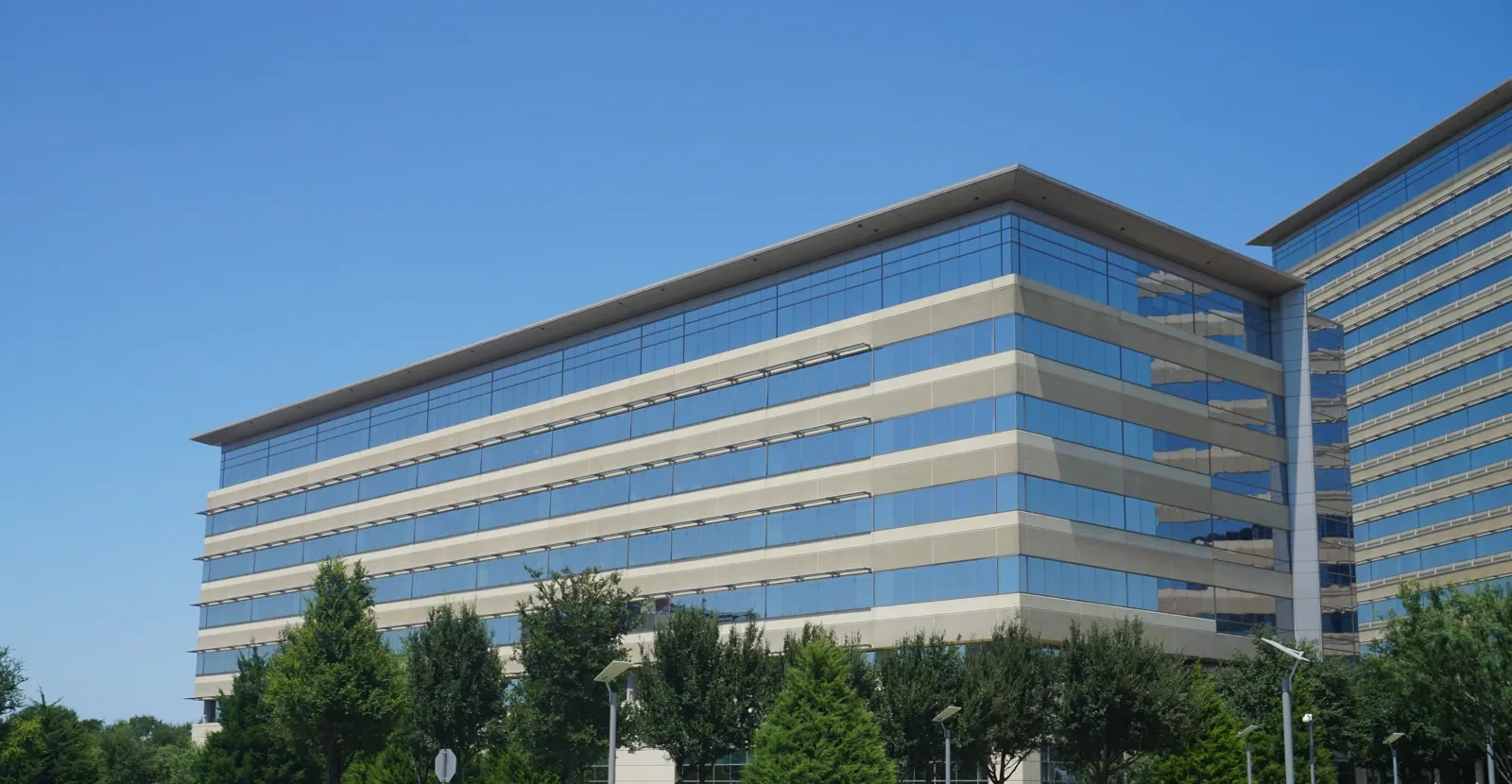
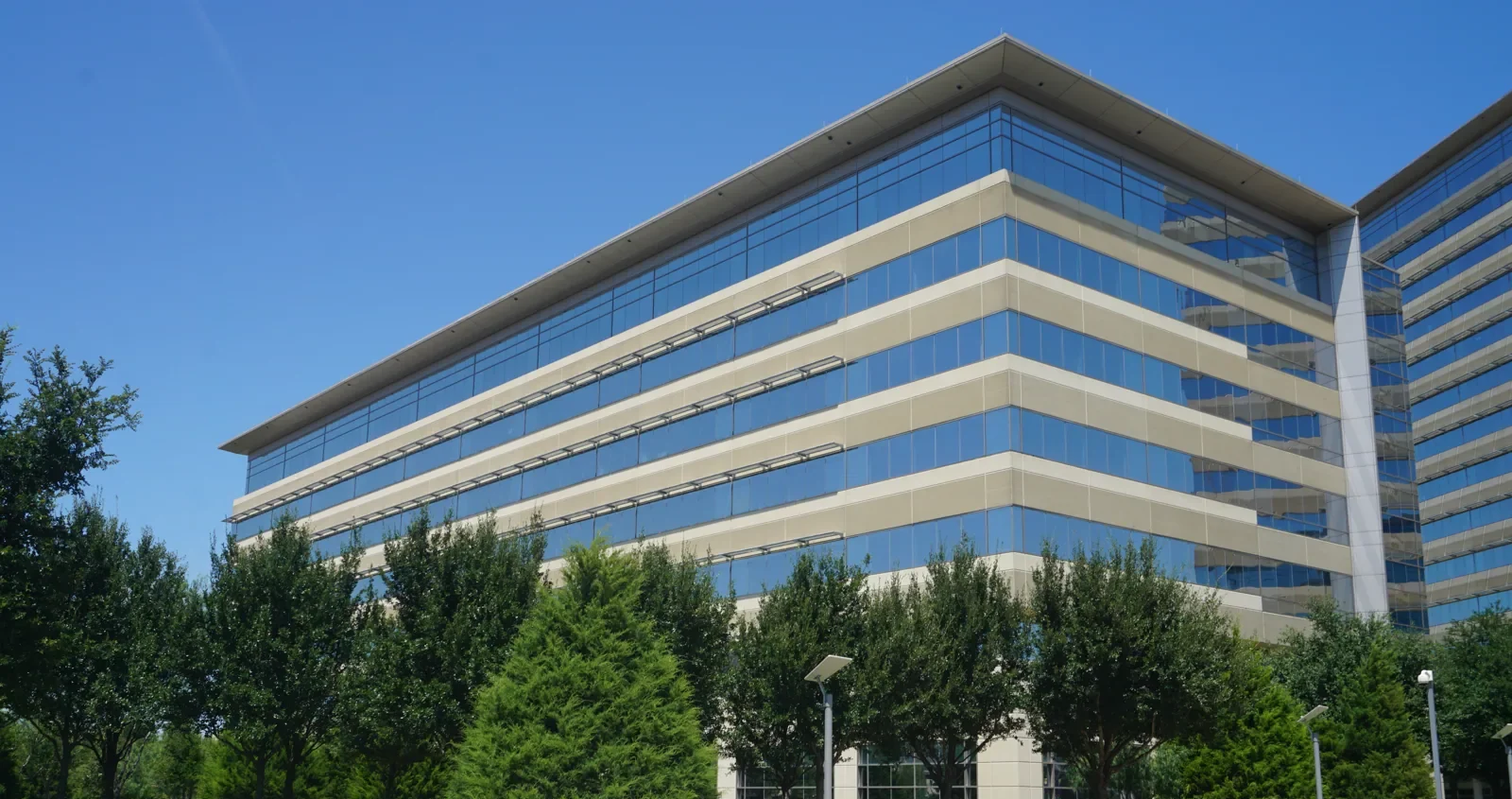
Richardson's commercial properties span offices, technology and research workplaces, manufacturing, education, retail, and mixed-use areas. CityLine West and Richardson Innovation Quarter are two distinct local settings, while other businesses operate across established corridors and districts. A city or district reference helps orient a service request but does not establish a building's roof system, condition, access rules, or project authorization. We begin with the property and affected roof area identified by its authorized contact, then inspect accessible seams, edges, flashings, curbs, drains, and penetrations. Findings and quantities stay tied to the specific building.
Request a Roof Assessment
All fields are required.
Commercial Roofing in Richardson, TX
Schedule the Roof Review With the Capital Decision
Inspect before a project scope locks
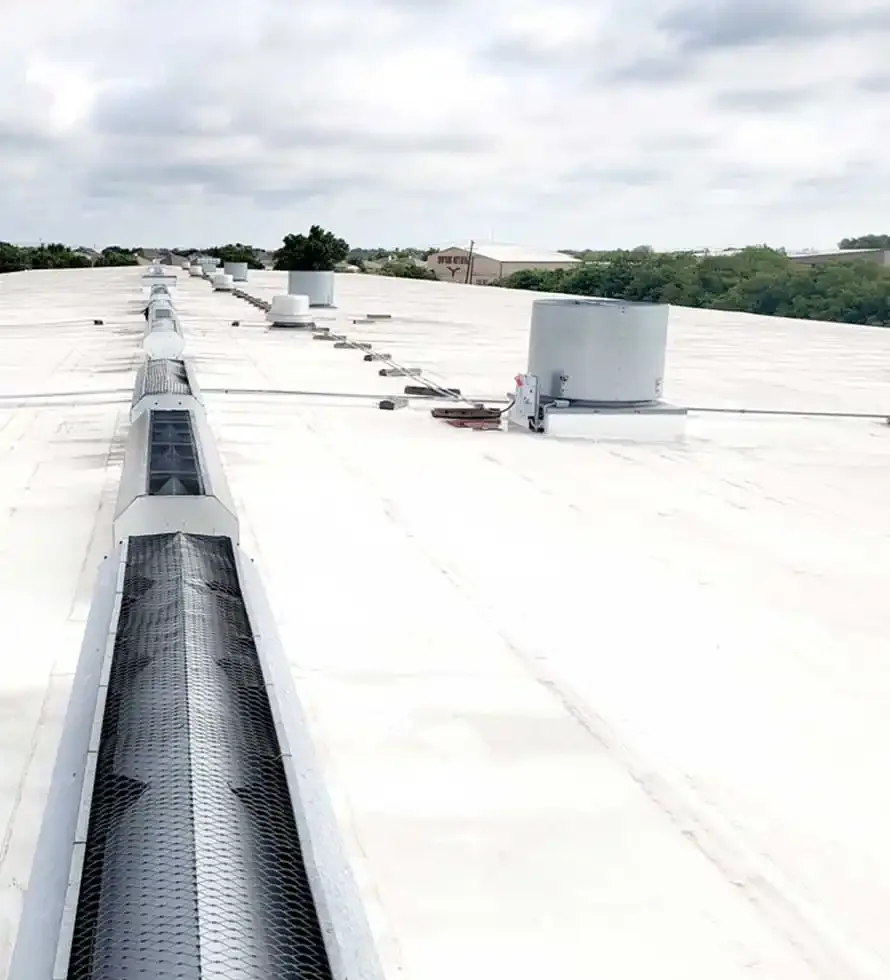
A renovation, equipment change, or tenant improvement anywhere in Richardson can alter roof penetrations, service routes, or access requirements. We record the assembly, membrane or panel, seams, drains, curbs, edge metal and prior repairs. We also check whether a proposed unit or conduit requires a new penetration. A commercial roof inspection gives the project team a roof-zone map before equipment placements and interior schedules become difficult to change.
Office users may require controlled access, quiet hours and uninterrupted interior service, but the specific rules belong to the property contact. We verify gate procedures, staging, lift position, delivery path and space below the work area. A condition report with photos can separate existing wear from work needed for a planned improvement. It should also identify roof areas we could not reach or inspect.
Richardson's commercial base includes technology and telecommunications employers; Richardson itself is a corporate and technology setting undergoing reinvestment. Those facts support attention to equipment coordination, not a presumption about a specific roof. We identify actual curbs, cable routes, mechanical units and attachments. When a tenant or building engineer has drawings, we compare the intended work with the roof details visible on site.
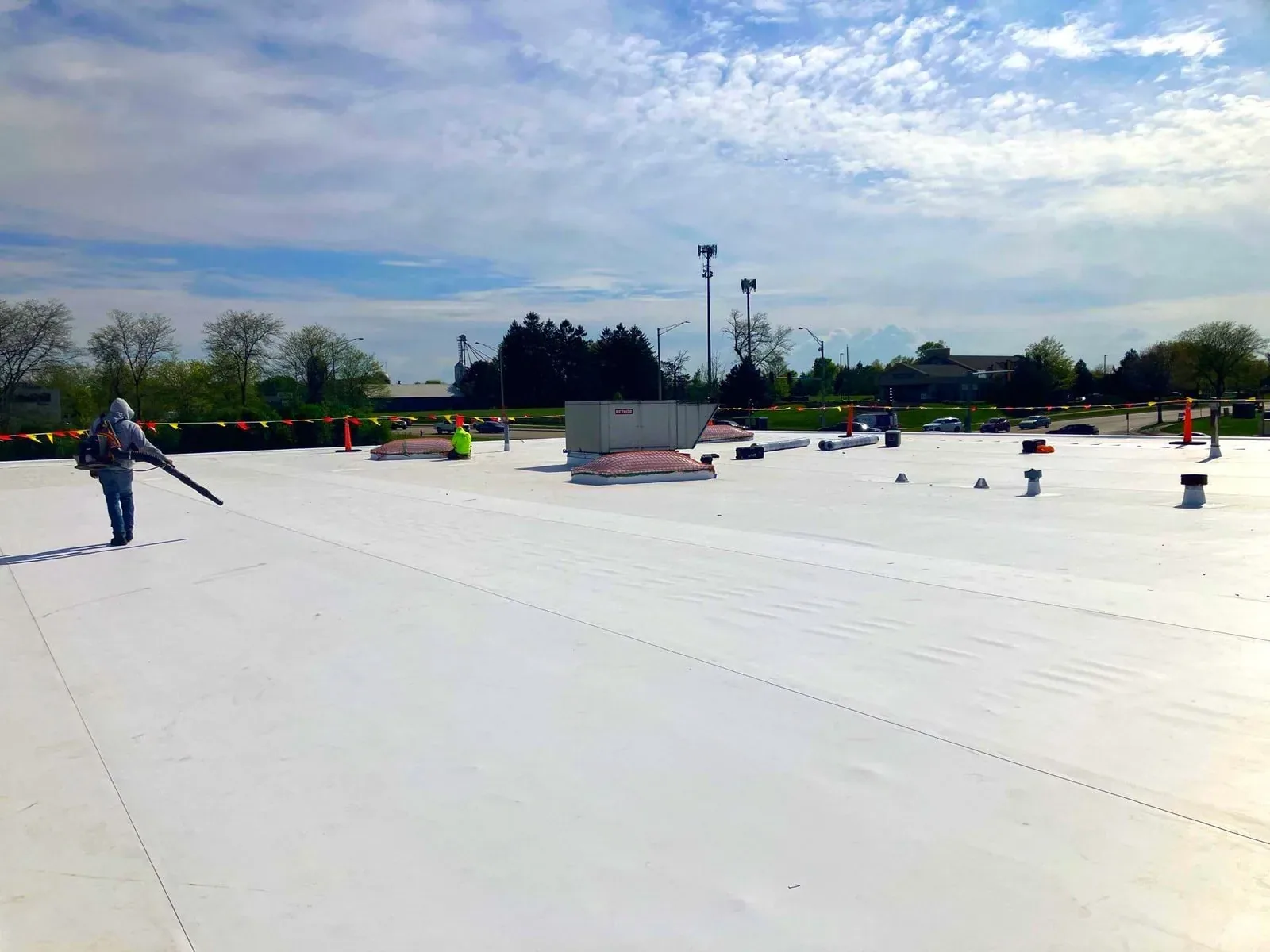
Sequence around occupied operations
A phased roof project needs a sequence that keeps each exposed area small enough to secure before a shift ends. We agree on building contacts, access windows, noisy work periods and interior protection. If a floor or network room cannot tolerate water risk or vibration, we map its roof zone and set a clear work boundary. This planning can affect crew hours and project duration even when material quantities stay constant.
When water appears inside, we inspect the roof above and adjacent details rather than assuming the point directly over the stain has failed. Seams, walls, drains and equipment transitions are checked for entry paths. For active water, emergency roof service can stabilize the exposure after access is confirmed. The permanent estimate then identifies repair preparation, tie-in material and the areas that remain outside the work.
If the condition is localized, a commercial roof repair may be enough. Repeated failures across zones or wet insulation may justify broader work. We compare the repair line with replacement and note any test needed before a final quantity can be set. This keeps an office refresh from absorbing roof work without showing what problem the added scope solves.
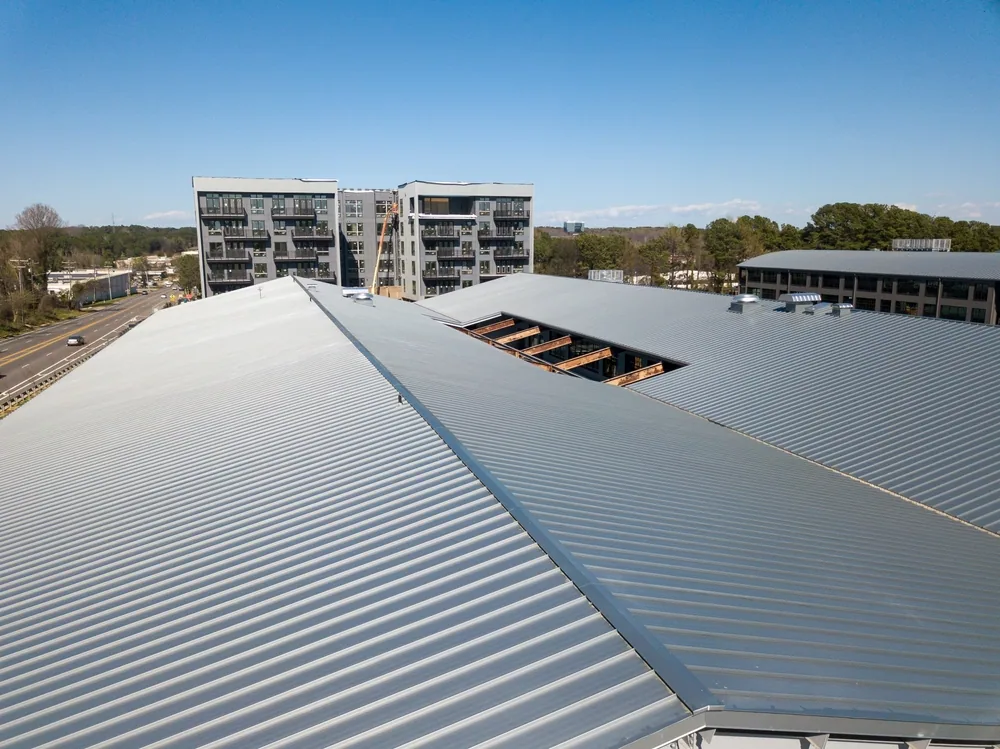
Compare Repair and Replacement on the Same Basis
A recover is considered only after checking layer count, attachment, moisture, deck, roof height and drainage. If those conditions support it, a recover review shows how the existing roof remains in the assembly. If they do not, the owner can compare repair with tear-off rather than carry an unsuitable overlay into a bid.
Replacement pricing separates removal, deck assumptions, insulation, cover board, membrane, flashing, edge metal, equipment resets and close-in. We state whether moving mechanical equipment is included and who coordinates shutdowns. Concealed deck work receives a unit price or approval trigger. This is particularly useful when reinvestment budgets are already allocated to interior and technology upgrades.
Richardson adopted the 2021 building, existing-building and energy codes with local amendments. We confirm permit review against the roof scope and any new equipment, curb or structural work. The permit question follows the actual design, not the campus name. A capital planning review can show the owner which roof work is urgent and which decision can align with later building improvements.
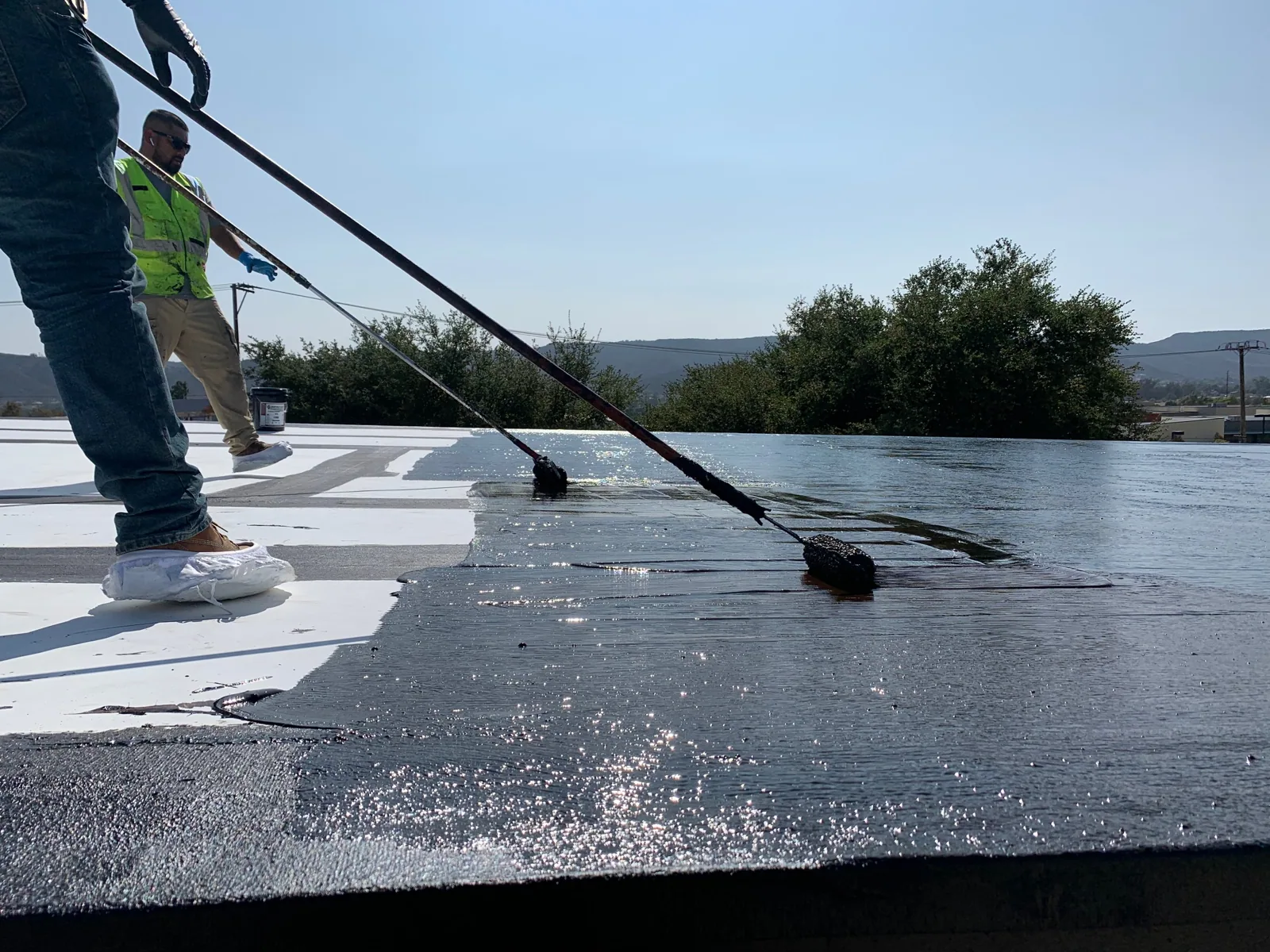
Plan the Open-Roof Period
DFW July and August average daily highs are close to 96 degrees, a relevant planning condition for Richardson roof work. Heat changes the workday and the time available for surface preparation and membrane application. Spring is the DFW region's busiest period for severe weather. We schedule tear-off in sections, confirm the daily watertight line and identify the interior areas below each opening. A weather delay should not leave an office floor exposed to a roof that cannot be secured.
A metroplex storm is not evidence that a Richardson property sustained damage. We photograph the roof features, inspection date and visible impact. If hail or wind is suspected, a storm damage inspection records the condition without assigning a cause the roof cannot establish. The owner receives a clear distinction between current wear, a suspected event and a repair need.
Heat can age sealants and stress seams, while blocked drains can keep water at vulnerable details. We inspect those conditions before proposing coating or replacement. A coating restoration assessment includes substrate, moisture, repair and drainage checks. The proposal shows preparation separately from coating area, so ownership can compare restoration with an assembly-level replacement.
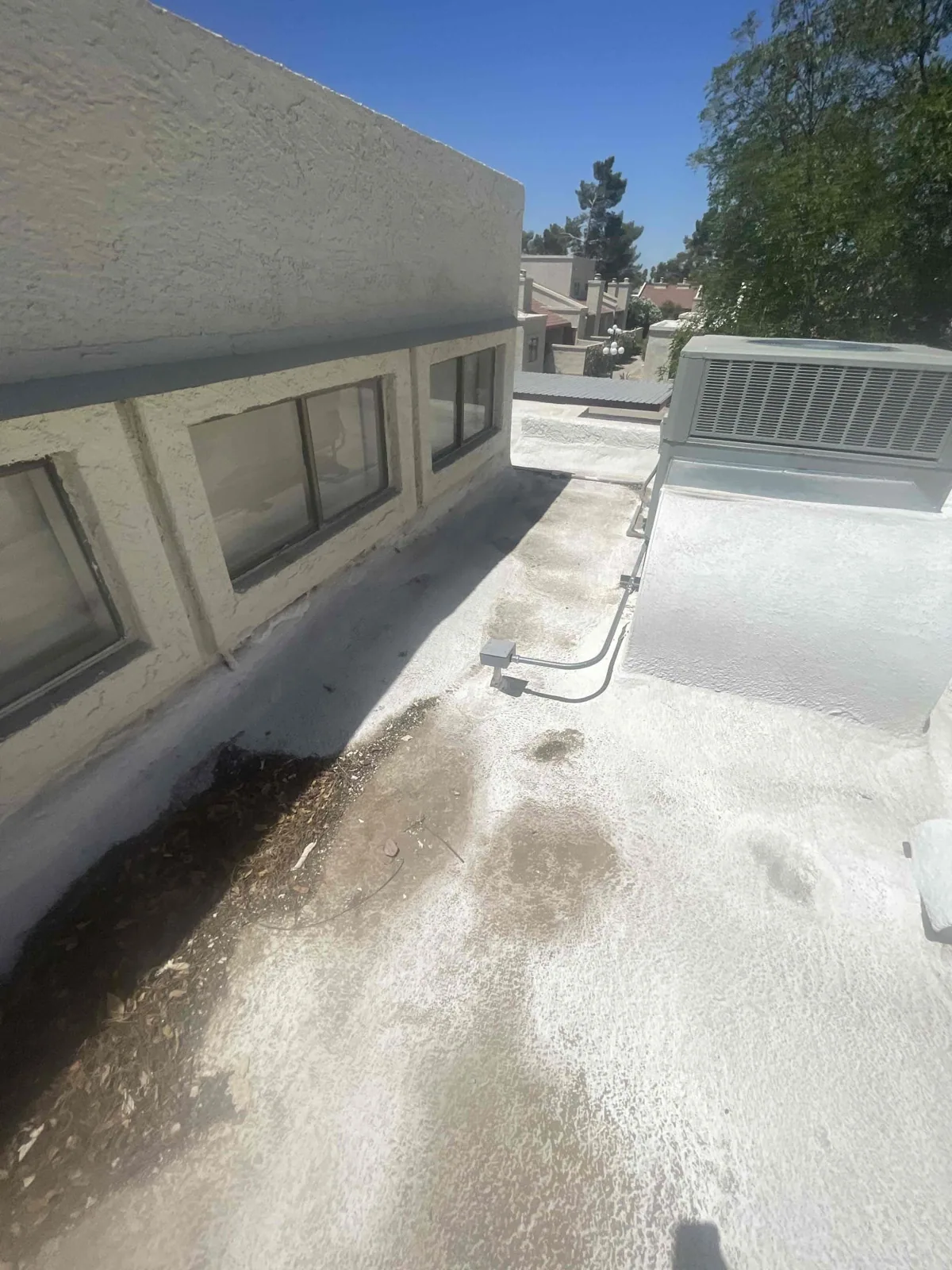
Coordinate work across Richardson properties
Portfolio planning across Richardson may involve more than one building, but each roof requires separate quantities, condition findings and approval limits. We can align inspection appointments and share a common reporting format while keeping properties distinct. A defect on one roof does not establish a defect on another. Ownership can then direct near-term funds to documented conditions instead of spreading a flat allowance across the portfolio.
CityLine West includes employment and mixed-use plans between US 75 and the DART Red Line; Richardson Innovation Quarter spans technology, research, manufacturing and education uses. These are distinct local areas with separate access and roof conditions. A CityLine West roof inspection or Innovation Quarter roof review starts with its own building contact and roof map.
At closeout, we list the repaired zones, installed material, photographs, remaining issues and the next recommended inspection date where justified. If a rooftop unit was moved or reset, the work record identifies that boundary. The owner can use the information during turnover, annual planning or a later tenant improvement without guessing which roof detail received attention.
For a corporate property with multiple decision makers, we also note which findings need engineering input, which can be priced as maintenance and which require an owner capital decision. That separation keeps the roof recommendation usable in a facilities meeting instead of leaving one broad condition label to interpret.
Related Roofing Work
Commercial Roof Inspection
Commercial Roof Condition Reports
Emergency Commercial Roof Repair
Commercial Roof Repair
Questions About Richardson
Which commercial properties in Richardson can be inspected?
We coordinate roof inspections for office, technology, manufacturing, education, retail, and mixed-use properties. The owner identifies the specific building, concern, and authorized access contact.
How do you plan roof work over active business operations?
We confirm access contacts, quiet periods, sensitive building areas, and the daily close-in plan before setting a schedule. The estimate identifies interior protection and shutdown coordination that affects duration.
Can a roof replacement wait until other building improvements are finished?
That depends on observed failure, moisture, and the risk of continued operation. We identify urgent repairs separately from work that can be scheduled with later improvements.
What should be checked before adding rooftop equipment?
We review available roof and structure information, curb details, flashing, drainage, and equipment access. The scope assigns responsibility for new penetrations and restoration.
Can you report on several Richardson roofs together?
We can schedule and present them in one portfolio view while preserving a separate condition map, photos, quantities, and approval boundary for each building.
Schedule the Roof Review With the Capital Decision
Send the building, planned improvements, current leak reports and timing window. We will inspect the roof and return a scope the project team can use.