
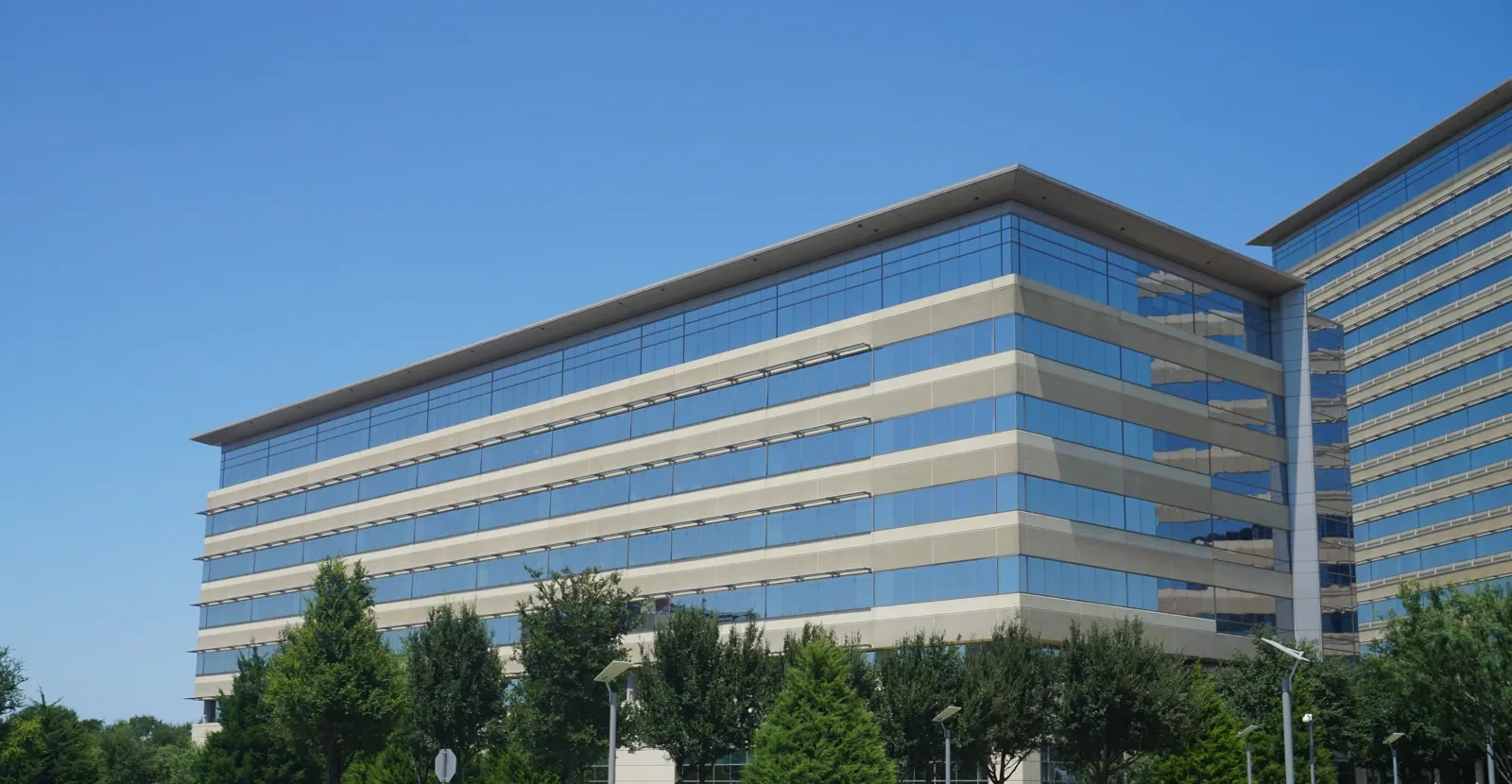
A production line can be affected by a small roof leak if water reaches controls or finished goods. Water near controls, finished goods, or a process line changes the work window and the protection plan. We inspect the assembly, equipment supports, penetrations, drains, and interior impact before recommending a repair or larger project in Richardson, TX. The budget should show which work can happen during normal shifts and what requires a planned shutdown or protected zone.
Request a Roof Assessment
All fields are required.
Manufacturing Plant Roofing in Richardson, TX
Fit the Roof Scope to the Production Calendar
Locate the Roof Condition Against the Process
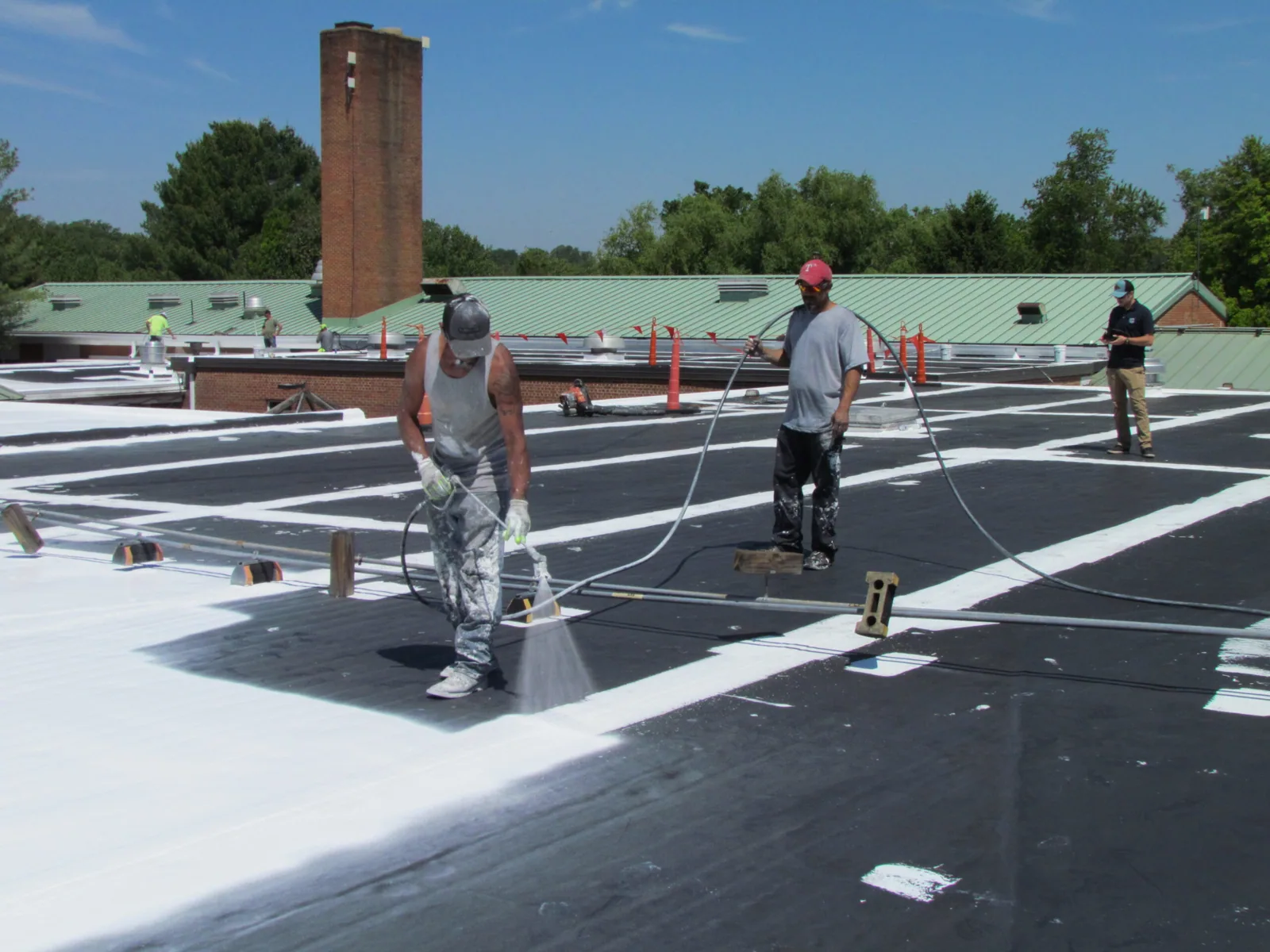
Interior staining does not always sit below the roof opening. Water may travel along a deck flute, insulation seam, conduit, or pipe before reaching a machine or panel. We compare the reported leak with field seams, curbs, exhaust points, and previous repairs. The plant contact identifies sensitive production areas and the times when access is possible. We document the likely water path and distinguish confirmed moisture from conditions that need a test opening.
Process equipment can create heat, vibration, fumes, or residue at roof penetrations. The flashing and curb detail should match the equipment movement and service requirements. We check whether exhaust discharge or maintenance work has degraded a membrane or coating. A roof inspection can map findings by production bay and record what was visible before the roof is opened. If a leak threatens operations now, a temporary stabilization visit can protect the affected zone while a permanent scope is prepared.
Review Curbs, Exhaust and Technician Routes
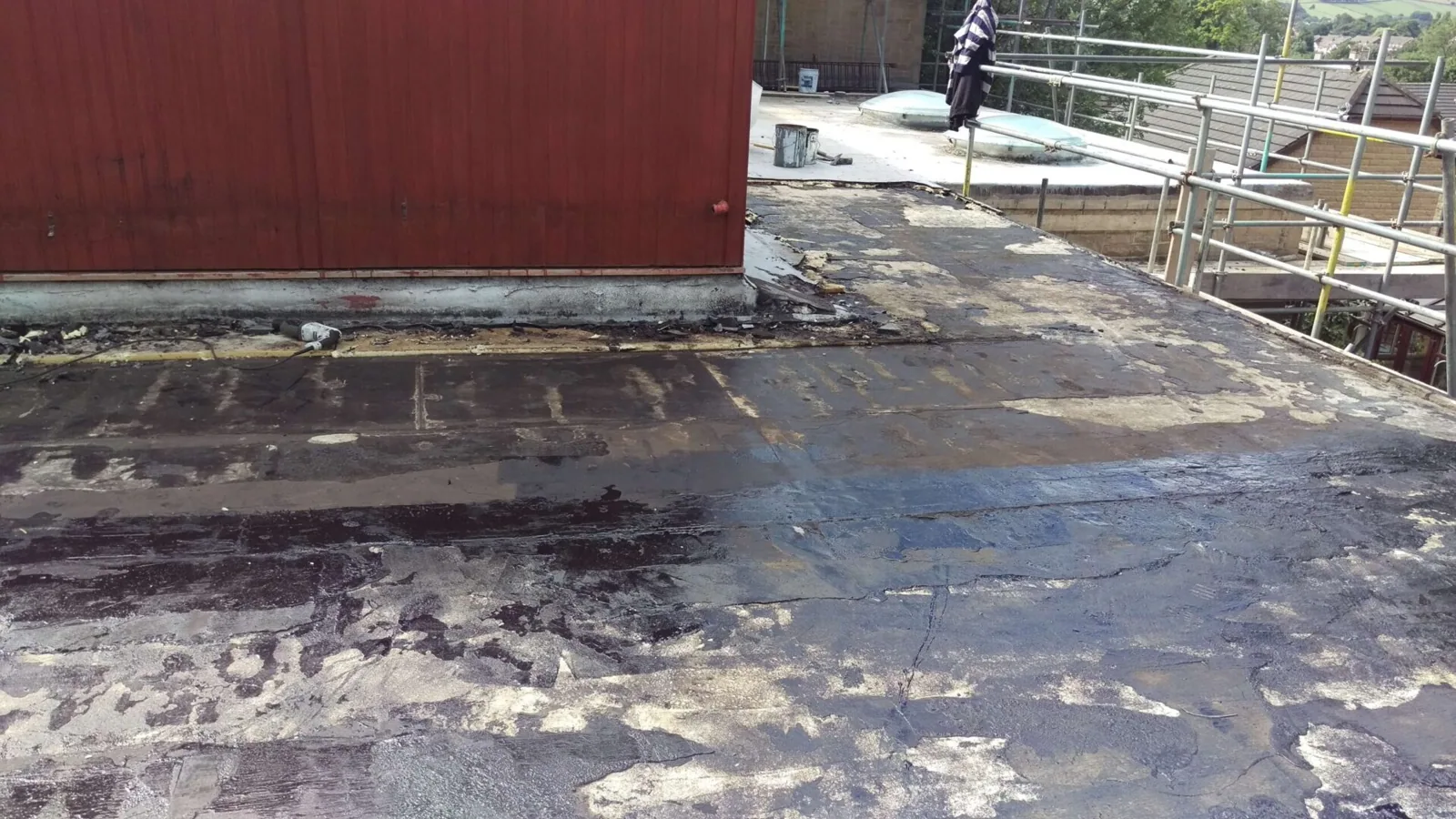
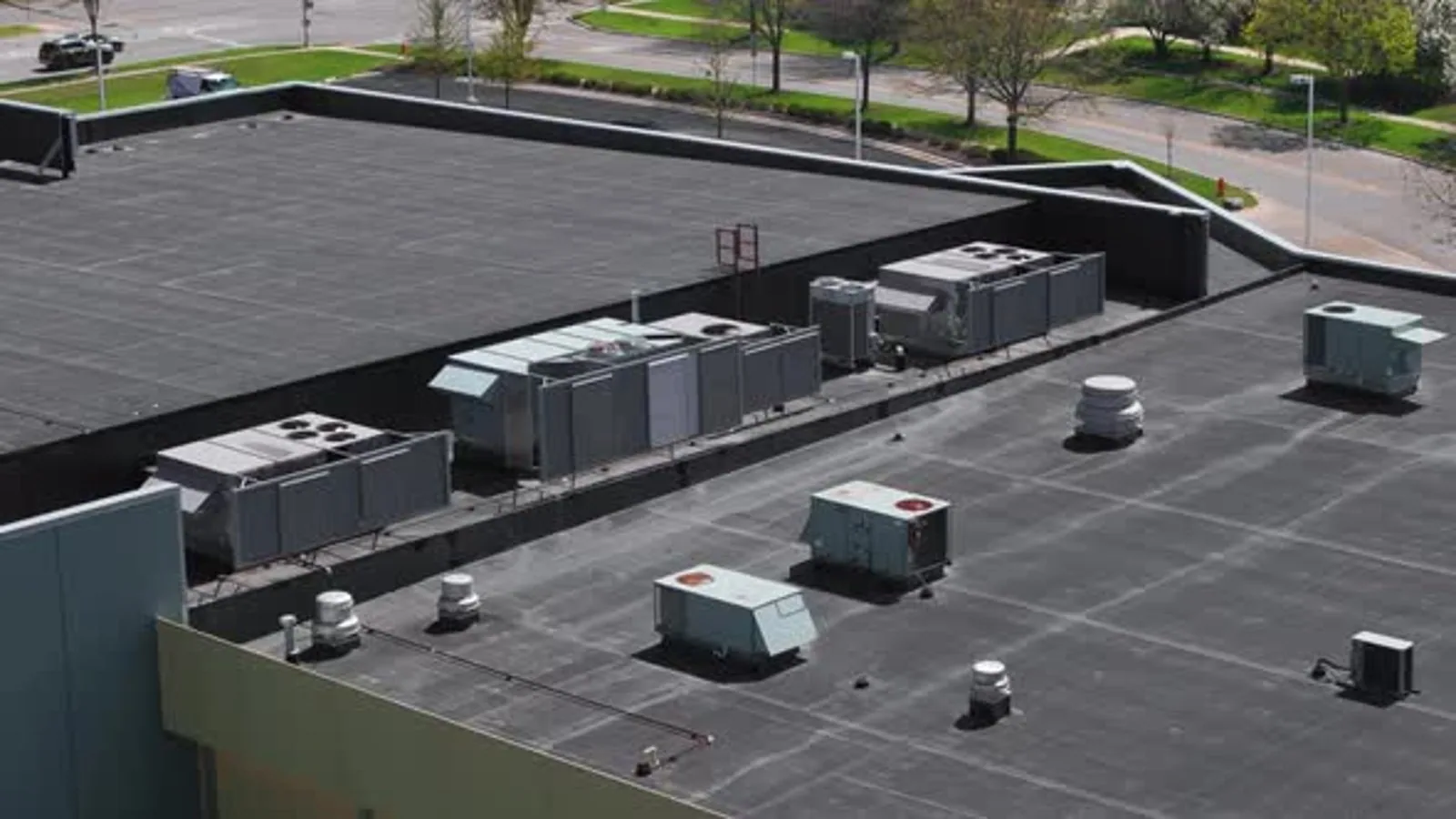
Plants often place fans, vents, stacks, and utility runs close together. Each opening affects roof drainage and creates a flashing detail that must stay accessible for service. We inspect curb attachment, counterflashing, sealant condition, nearby seams, and the path runoff follows around the equipment. If a unit has been added or moved, the old opening needs to be closed as part of the roof scope rather than hidden under a new layer.
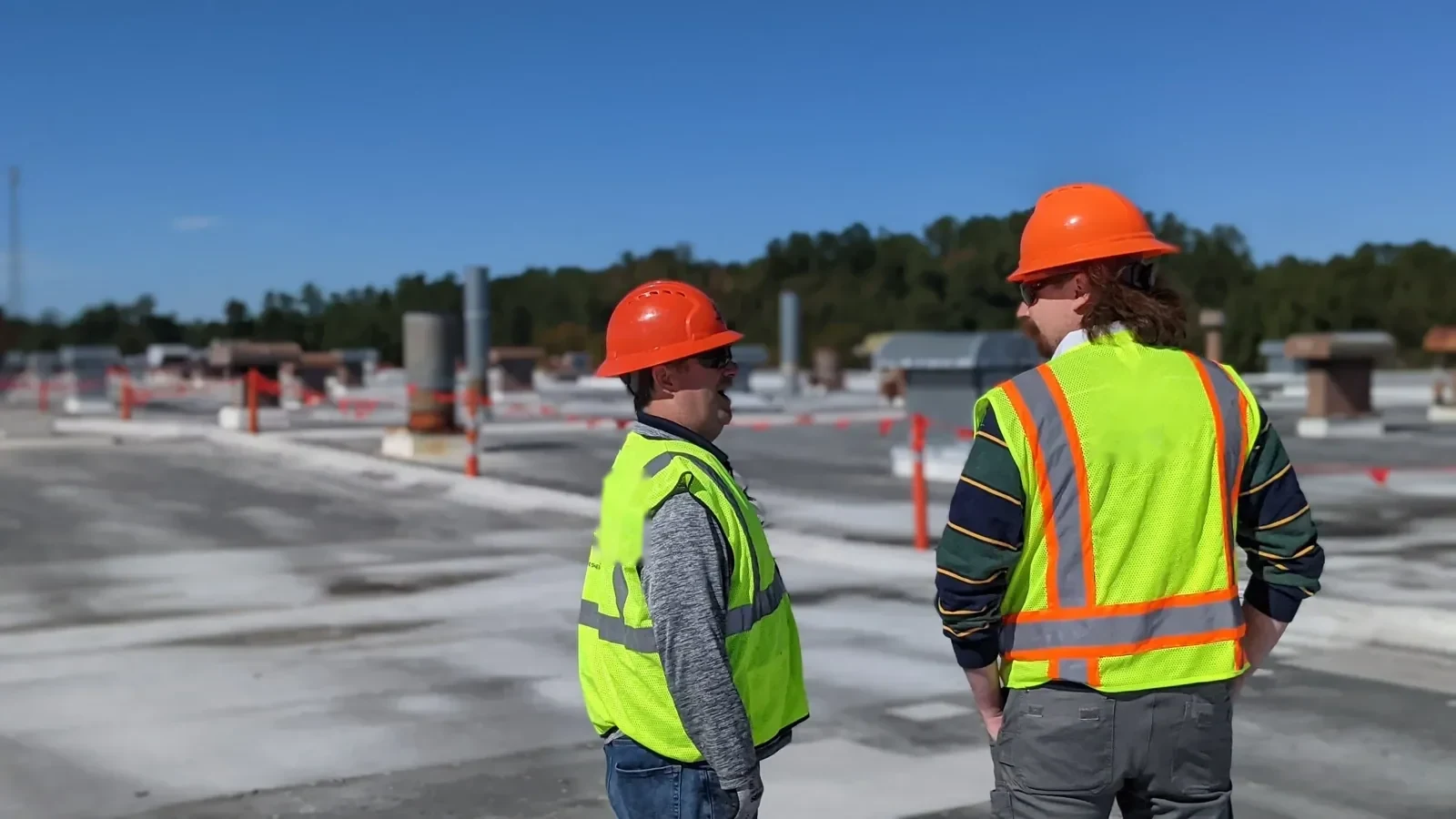
Technicians may cross the roof several times a week. A marked route and protective walkway can limit wear around equipment. We check for punctures, crushed insulation, loose walkway material, and repairs that have separated under foot traffic. A curb and support review can be combined with the membrane work. Drainage is also essential where equipment blocks the flow line. A drainage correction belongs in the scope when low areas, blocked outlets, or missing overflow routes contribute to water entry.
Select a Roof Assembly for Plant Conditions
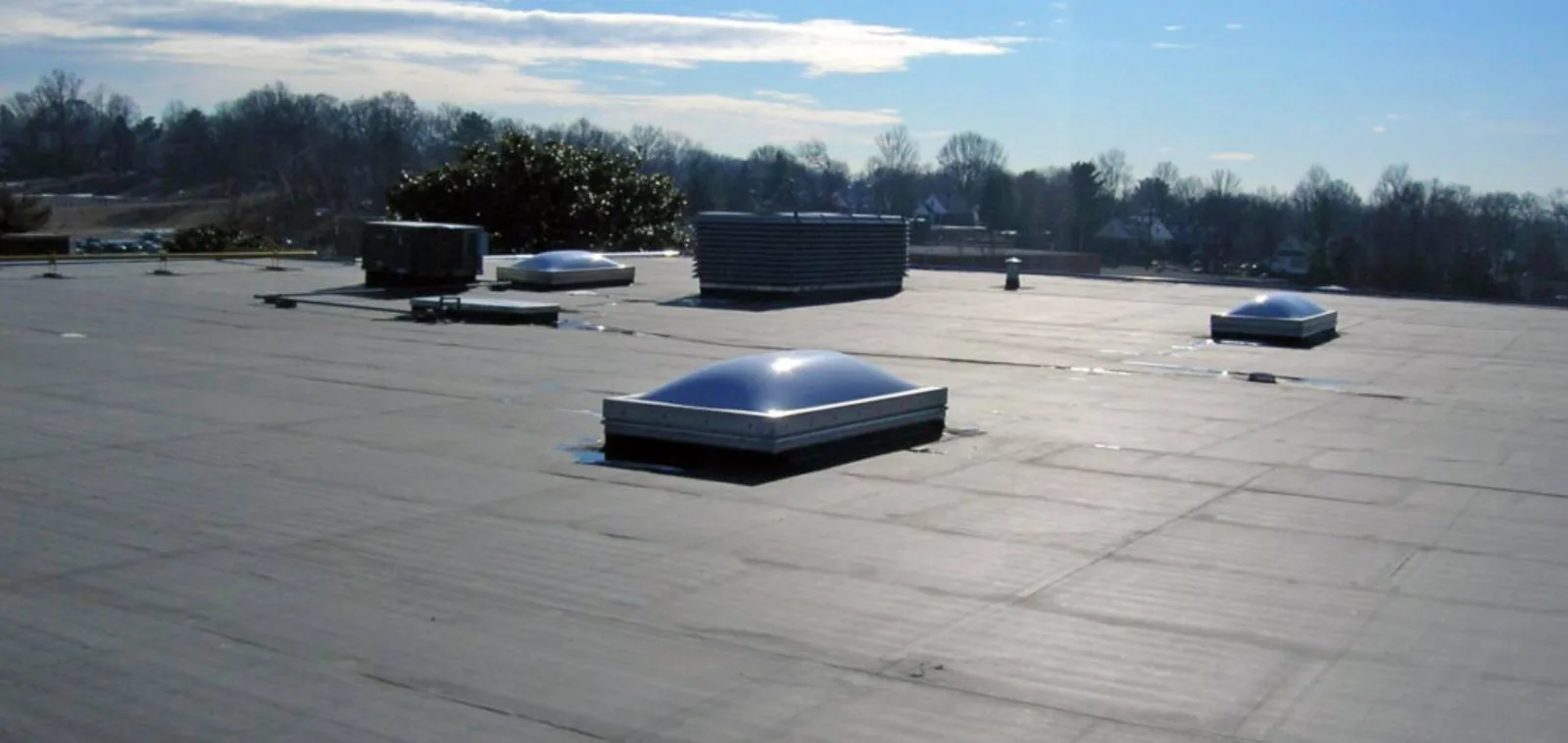
Manufacturing buildings can have different production loads, roof decks, temperatures, exhaust patterns, and maintenance routines. The specified system should fit those conditions and the building's wind design. We compare membrane, insulation, cover board, attachment, metal transitions, and repair requirements as one assembly. A material substitution can alter welds, adhesives, edge details, or access provisions, so it should be reviewed before purchase orders are released.
The Richardson Innovation Quarter includes manufacturers, technology startups, corporate research and development, and educational institutions. That local business mix is relevant to the range of operating settings, not proof of another property's building systems. For a specific plant, we confirm heat discharge, airborne residue, utility equipment, and sensitive areas during the walkthrough. A PVC membrane, EPDM, or standing-seam metal roof can be compared when design and exposure support those systems.
Keep Weather Exposure in the Maintenance Plan
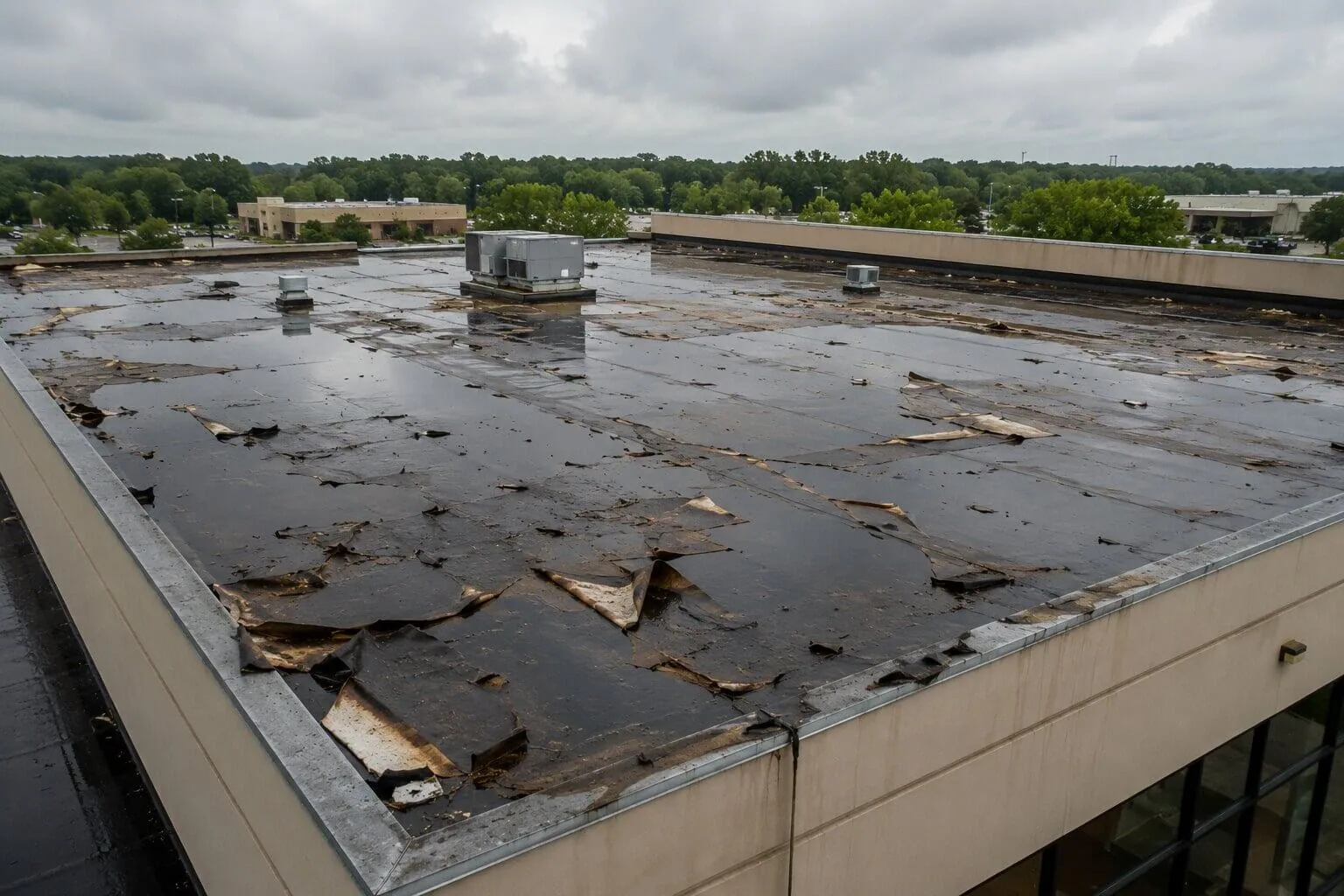
Richardson's recorded July and August average highs are 95.6 and 95.8 degrees. Repeated thermal movement can strain a plant roof at seams, seals, coatings, and metal interfaces. The roof should be checked for open laps, brittle flashing, split sealant, displaced edge metal, and ponding before a hot-season leak becomes an interior interruption. Spring is also an active thunderstorm period in the DFW area, with hail and damaging wind possible across the metroplex.
The October 2019 storm account records tornado damage in Richardson near the Audelia-Buckingham corridor. After a relevant storm, a plant still needs a separate condition review. We document punctures, impact marks, opened seams, and water paths instead of assuming a loss. A storm inspection can separate observed impacts from pre-existing wear. Keep production and roof records together so a facility manager can compare whether a failure is new, recurring, or limited to a previous repair area.
Sequence Roof Work Around Production Hours
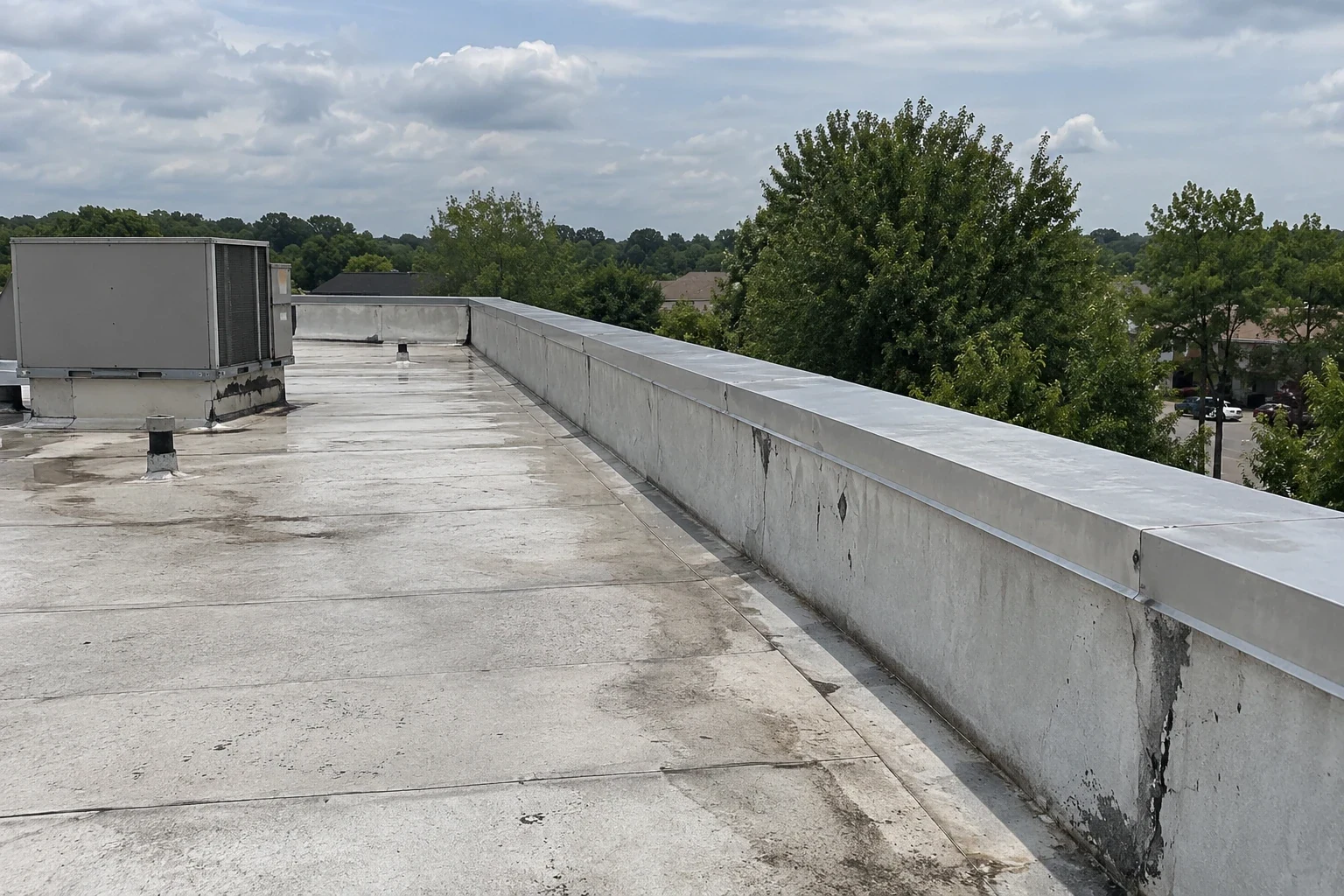
We identify production shifts, changeovers, deliveries, air-intake locations, and areas where dust or noise cannot be tolerated. The plan sets roof zones, crew access, material handling, and the point where work must be watertight before a shift ends. If equipment cannot be shut down, temporary protection and a controlled work area may be required. The owner should know which tasks create noise, odor, vibration, or short-term access restrictions.
Richardson is served by US 75, President George Bush Turnpike, Plano Road, Renner Road, Campbell Road, and other corridors linking employment areas. Those connections matter to deliveries and crew travel, while the actual gate and staging area still require a site review. We confirm crane placement, loading capacity, security rules, and internal routes with the plant contact. If tear-off reveals damp insulation or damaged deck, the estimate defines a stop point and approval path before work expands into adjacent production bays.
Make the Shutdown and Change Process Clear
For a plant reroof, we confirm how Richardson's local amendments apply to its adopted 2021 building and energy editions and to the actual permit scope. A plant may also need internal engineering, safety, environmental, or production approval before roof access. We identify documents and access requirements early so the roofing schedule is not mistaken for the entire approval schedule.
A replacement estimate should state demolition, insulation, cover board, attachment, edge metal, penetration rebuilds, drains, protection, and closeout. It should distinguish the base scope from allowances for concealed deck or moisture repairs. A recover assessment can test whether the existing assembly may remain; replacement planning can show removal and temporary protection. If a condition report is used for capital approval, document photos by plant zone, the affected process area, and the schedule constraint.
Track Repairs by Area and Equipment
A roof log helps maintenance staff connect an interior report to the matching roof zone. Record each repair material, location, date, and nearby unit or process area. Include photos of drains, seams, penetrations, and changes made during equipment projects. Those details help a later technician avoid placing incompatible materials at a previous patch and let the owner see if failures are spreading.
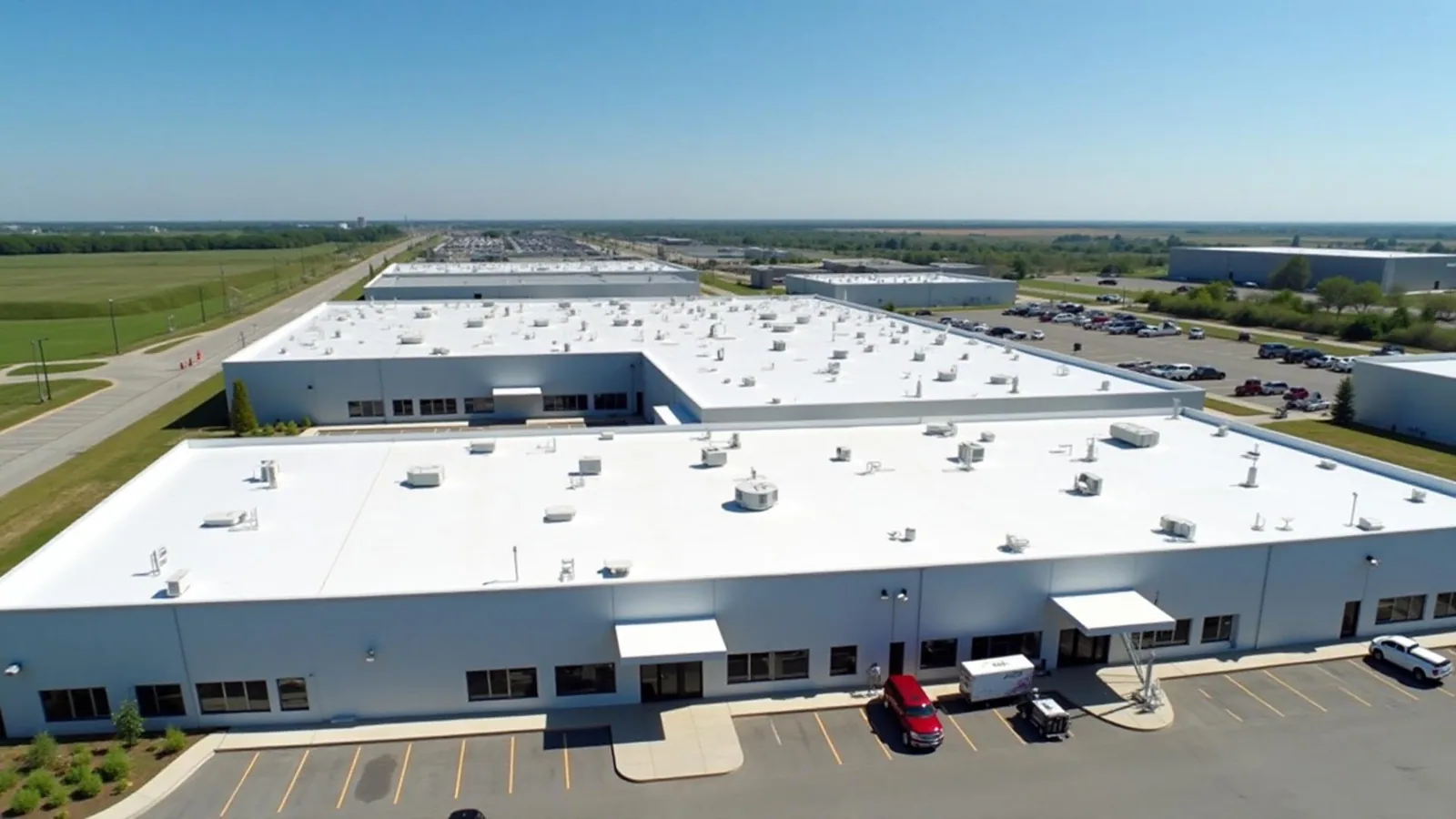
In the Richardson Innovation Quarter, manufacturers operate alongside research and technology firms and educational organizations. At CityLine, medical, office, retail, hotel, residential, park, and civic uses share a mixed-use district. These local examples reinforce that access and operating windows differ across the market. A plant near the Innovation Quarter still needs its own maintenance and access plan. Compare a warehouse roof plan with a distribution-center plan when operating conditions differ. The maintenance review should check drains, flashings, service routes, and post-storm conditions before they interrupt the next production cycle.
Related Roofing Work
Commercial Roof Inspection
Emergency Commercial Roof Repair
Rooftop Equipment Curb and Support Roofing
Commercial Roof Drain and Scupper Service
Questions About Manufacturing Plant Roofing
Can roof repairs happen while a production line is running?
That depends on the roof zone, interior sensitivity, noise, vibration, and access requirements. We coordinate a work window with plant operations and define protection and a safe stop point before opening the assembly.
What should we inspect around manufacturing equipment?
Check curbs, exhaust penetrations, supports, flashing, nearby seams, and the routes service technicians use. We also check whether heat or residue has affected the roof material and whether a moved unit left an unclosed opening.
How do you keep roof work from spreading into production?
We map the affected zone, set the removal limit, and define how hidden moisture or deck damage will be priced and approved. That lets the facility decide whether to extend the work before adjacent bays are affected.
Is a roof recover suitable for a plant?
It may be if the existing layers are dry, secure, and eligible, and if the added roof height works around curbs, drains, and equipment. We inspect those conditions and compare recover with removal before approval.
What should a plant roof bid include?
Compare roof assembly, penetration rebuilds, drains, insulation, protection, staging, shutdown coordination, and concealed-condition assumptions. The proposal should show the sequence and the approval point for changed work.
Fit the Roof Scope to the Production Calendar
Share leak zones, equipment access rules, shift changes, repair history, and the target date. We will inspect the roof and price work around plant operations.