A KEE roof earns its place through the exposure it must handle, not the name on the membrane. In Richardson, TX, we review the existing assembly, chemical exposure, seam condition, and project window before putting KEE against repair or replacement options. KEE is a ketone ethylene ester polymer used in some PVC membranes. The product and reinforcement still matter. We identify the specified manufacturer system and make the estimate show what changes the next spend, including tear-off, insulation, flashing, and access.
Request a Roof Assessment
All fields are required.
Commercial KEE Roofing in Richardson, TX
Review the KEE Scope Before Setting the Project Window
Separate the Polymer from the Whole Roof
KEE is used in certain PVC membrane formulations. That does not make every KEE product identical or make the polymer a substitute for a complete roof assembly. Product thickness, reinforcement, attachment, cover board, insulation, perimeter details, and manufacturer requirements all affect how the installed roof performs. We identify the exact membrane under consideration, then check whether the deck and existing layers can support it. The proposal should name the membrane and assembly instead of relying on a broad material label.
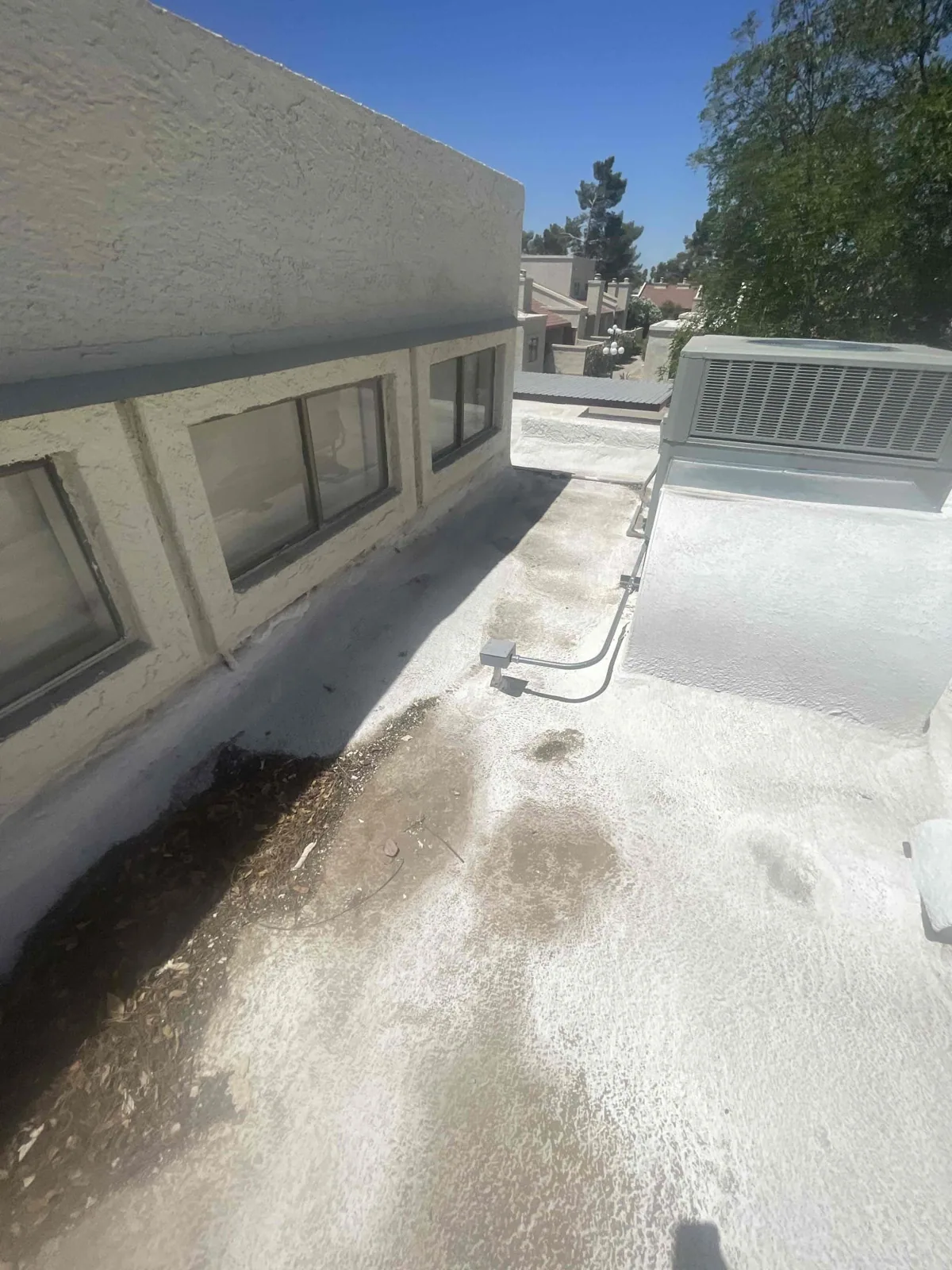
On an existing roof, the field sheet is only one part of the decision. We check laps, patches, penetrations, wall transitions, edge metal, drains, and areas where service work has crossed the membrane. If the roof has a coating or an earlier recover layer, that history can affect adhesion and warranty options. A hands-on roof inspection gives the owner a map of known conditions before a replacement allowance is set. Where documentation is missing, selective openings can confirm the layers that influence the scope.
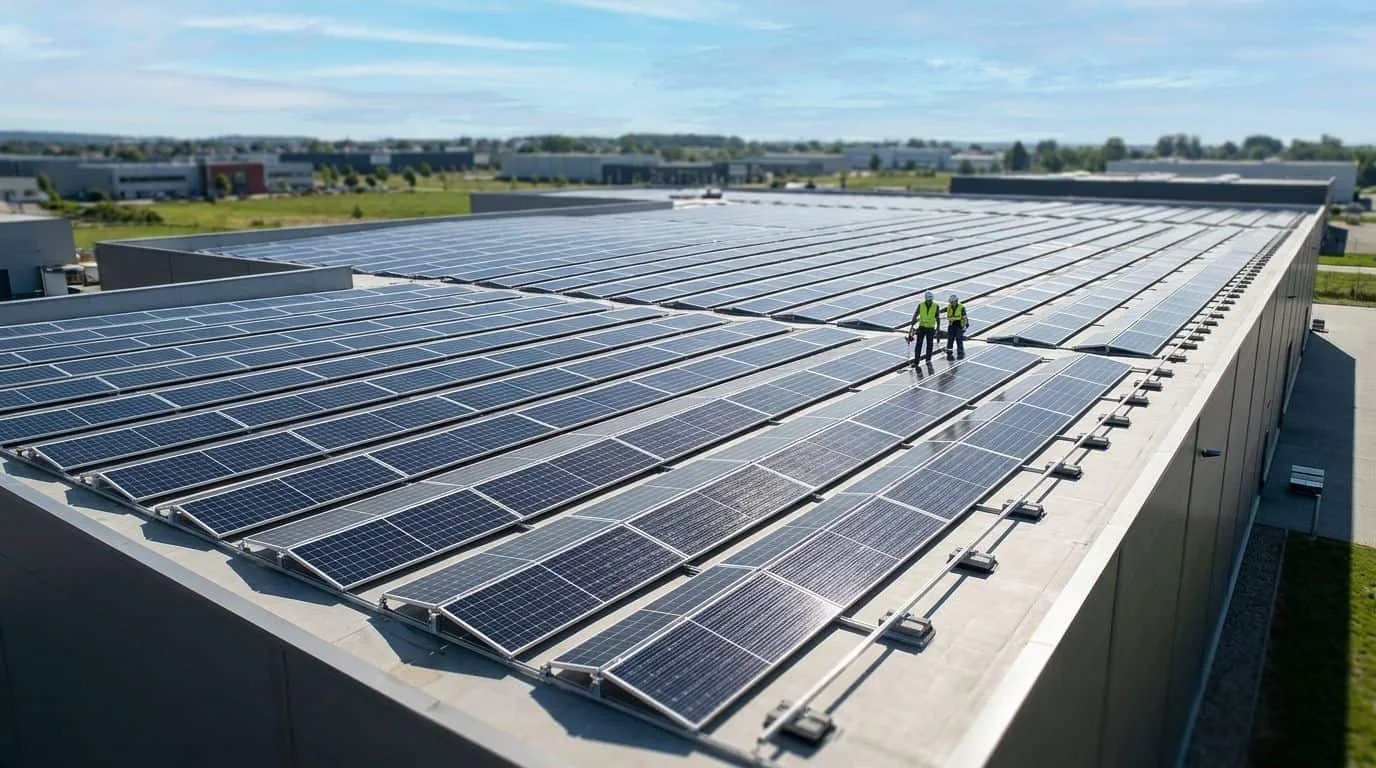
Match the Membrane to the Exposure
Some KEE formulations are selected where oils, animal fats, or other chemical exposure matter. That claim must be tied to the specific product and its tested use. We ask what reaches the roof: kitchen exhaust, process discharge, rooftop service work, or ordinary weather alone. A food tenant, a laboratory, and a general office do not present the same surface conditions. The answer can change membrane selection, protection around equipment, and how maintenance teams reach units without dragging tools across the field.
Richardson's summer heat puts repeated expansion and contraction on seams, curbs, and perimeter details. DFW spring storms can bring hail and high wind, but a metroplex event does not establish damage at an individual property. We inspect the actual roof and record impacts, displacement, water entry, and repair history. A KEE system should be compared with standard PVC roofing and TPO membrane only after the exposure and project requirements are clear. A chemistry advantage has little value if the assembly is not suitable for the deck or the operating plan.
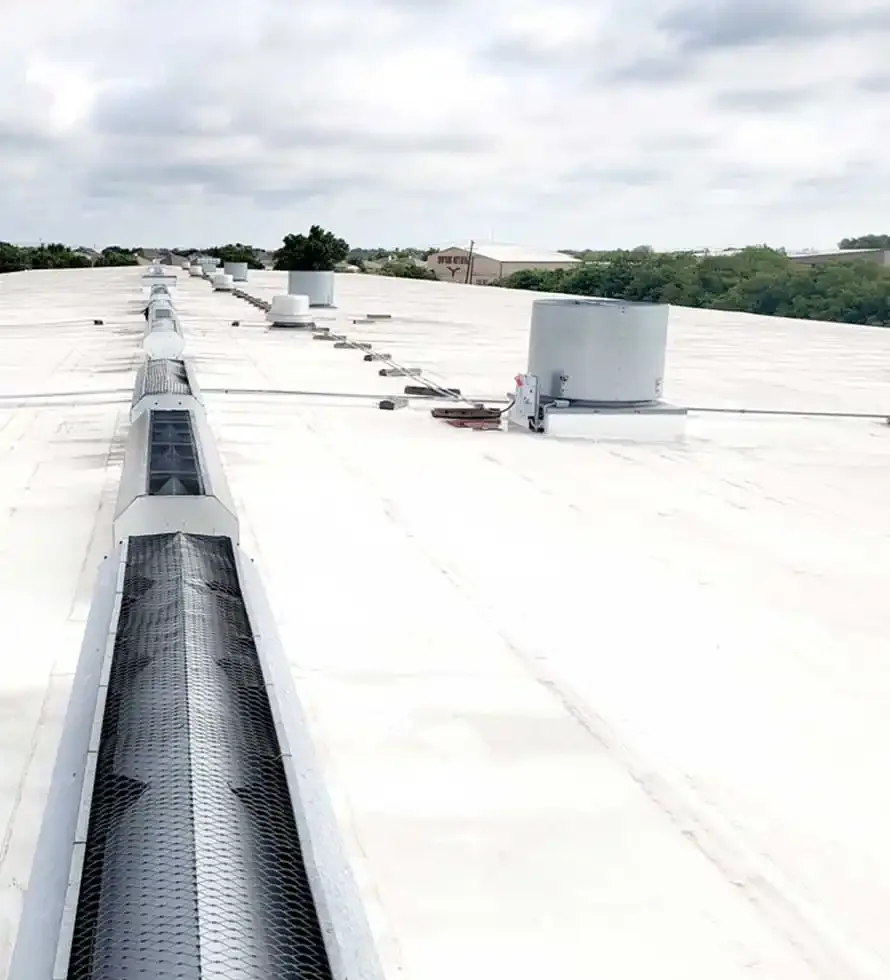
Price the Details That Keep Water Out
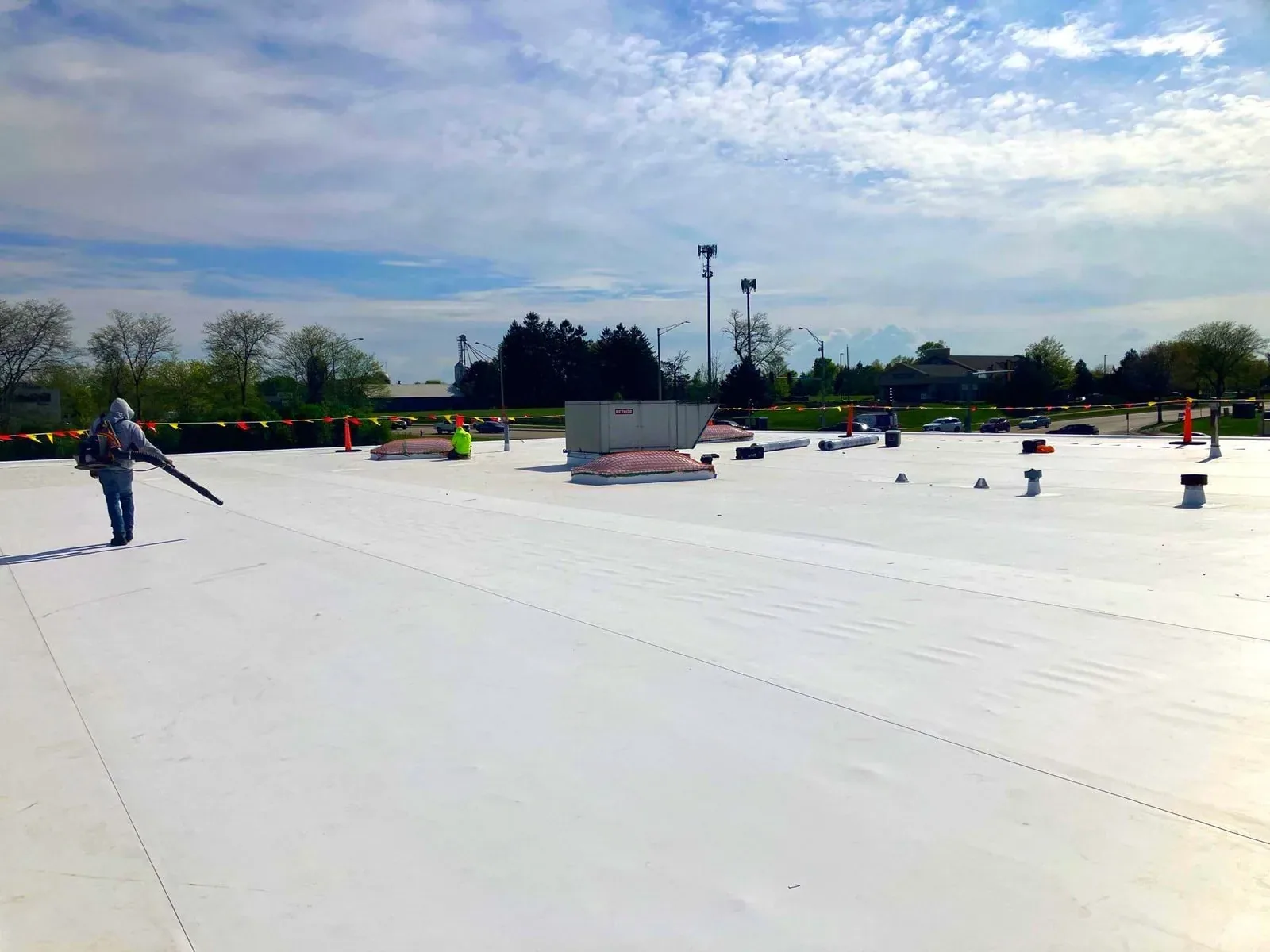
Thermoplastic membranes use heat-welded seams. Weld quality depends on surface condition, machine setup, speed, pressure, and weather during installation. We inspect test welds and completed seams, especially where the sheet changes direction or meets a curb. A strong field seam cannot correct a loose perimeter or failed drain detail. The scope should name flashing at pipes, equipment supports, expansion joints, roof edges, and wall terminations instead of treating those locations as incidental accessories.
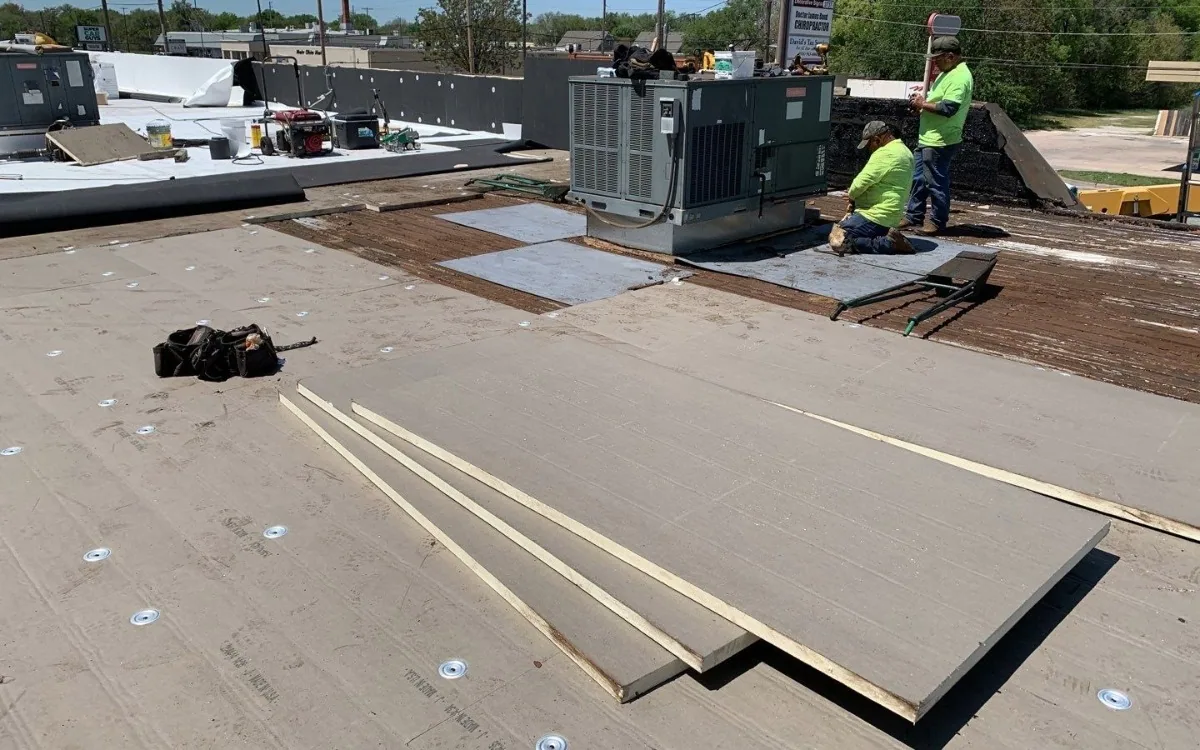
Drainage also belongs in the membrane decision. We check whether outlets are clear, whether low areas hold water, and whether crickets or tapered insulation can direct runoff. A recover can preserve usable material only when the existing assembly is dry, secure, and within applicable layer limits. The recover review should state how those conditions will be confirmed. When replacement is more practical, compare disposal, deck repair, temporary protection, and insulation in the same scope. This keeps a low initial number from hiding work that must happen after tear-off.
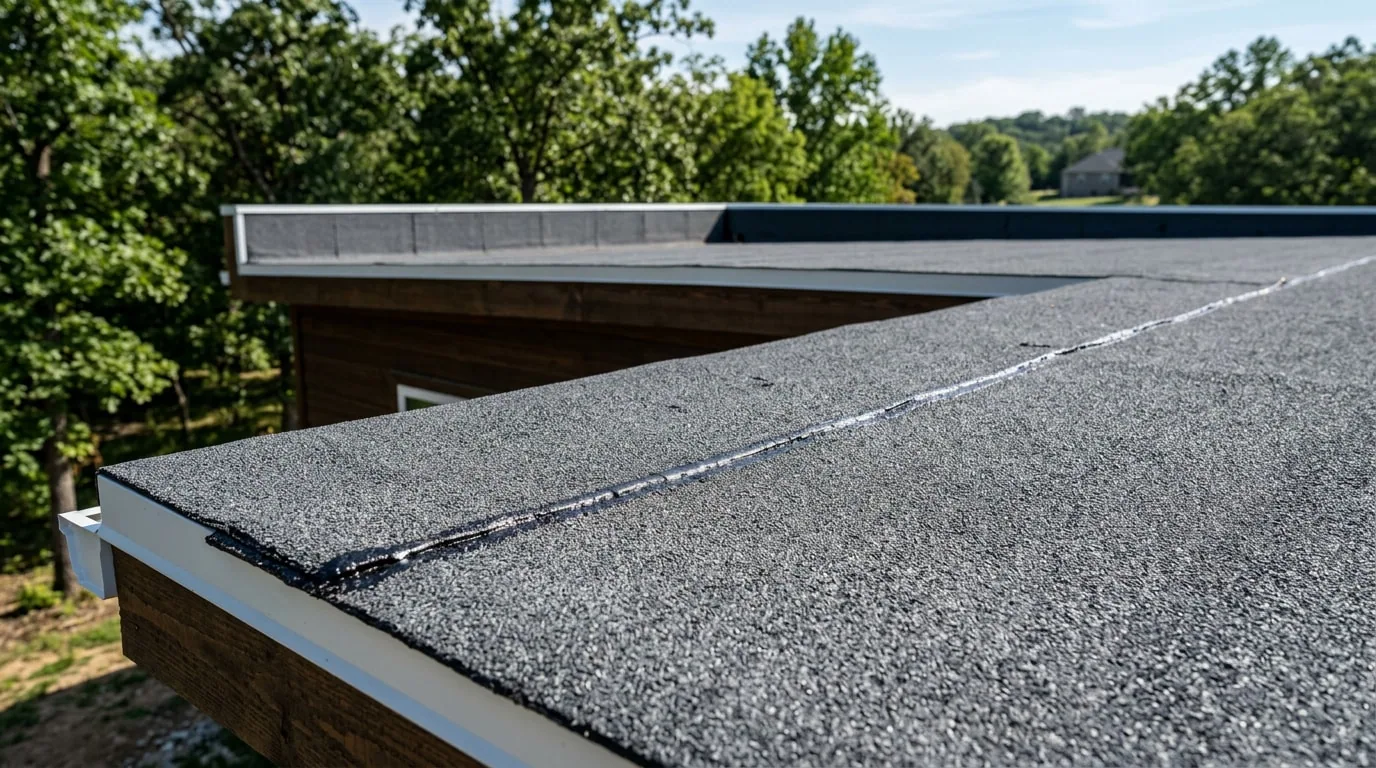
Protect the Schedule While the Roof Is Open
Installation sequencing changes the cost of an occupied building. We identify roof zones, delivery points, crane or hoist needs, tenant access, interior protection, and the weather threshold for closing each area. A shorter open-roof window can require more mobilization or a different crew sequence. On a building with sensitive equipment below, the plan should define how the contractor will protect ceilings, racks, and active spaces before removing the membrane.
Richardson's office and research base includes the Richardson Innovation Quarter supports research and technology uses, while CityLine combines offices, medical services, retail, hotel operations, apartments, and public space. A roof near the Innovation Quarter still needs a site-specific staging plan. We confirm loading, pedestrian routes, roof access, and quiet hours with the building contact. If concealed wet insulation or deck damage changes the work, the owner needs a documented stop point and a price decision before the crew expands the scope.
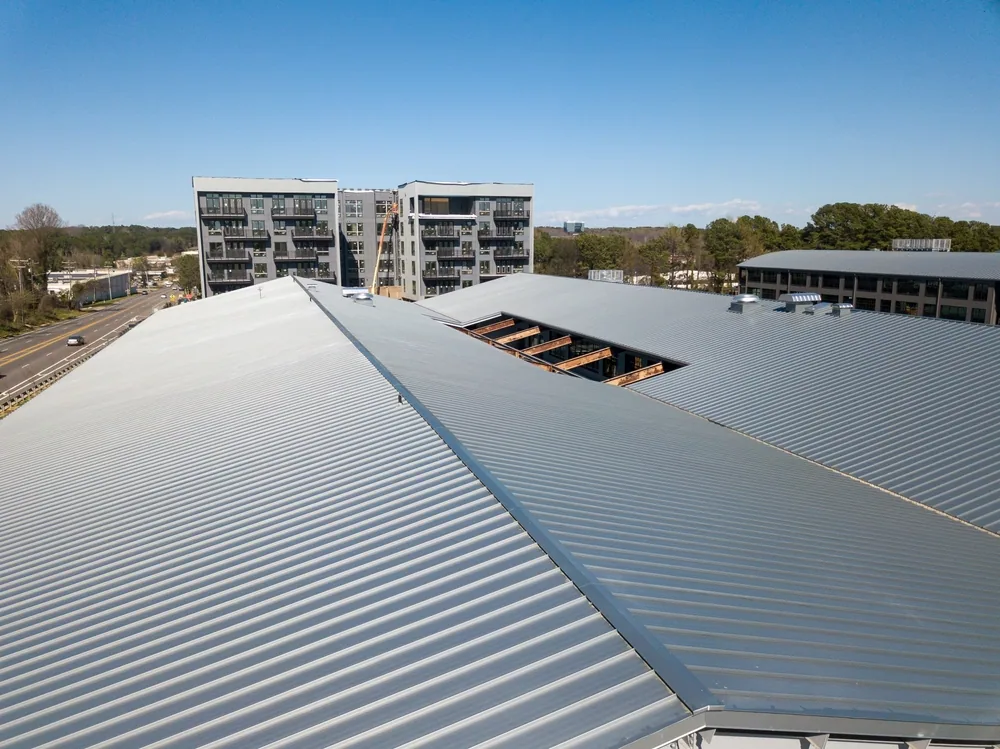
Make the Approval Path Part of the Scope
For Richardson projects, we verify the locally amended 2021 codes and permit path that match repair, recover, or full replacement. The project team should determine which permit path and energy provisions apply to the specific scope. A repair, recover, and full replacement can trigger different review questions. We coordinate the roofing assembly, insulation values, edge conditions, and attachment details with the project documents rather than assuming the material selection settles compliance.
A useful estimate separates membrane, insulation, cover board, flashing, edge work, drainage corrections, demolition, and closeout. It states assumptions about deck condition and identifies unit-priced concealed work where appropriate. If a manufacturer system has a required detail or inspection, that should be visible in the submittal path. Owners can also compare the proposed assembly with EPDM and drainage corrections without mixing unlike scopes.
Decide What Belongs in This Budget Year
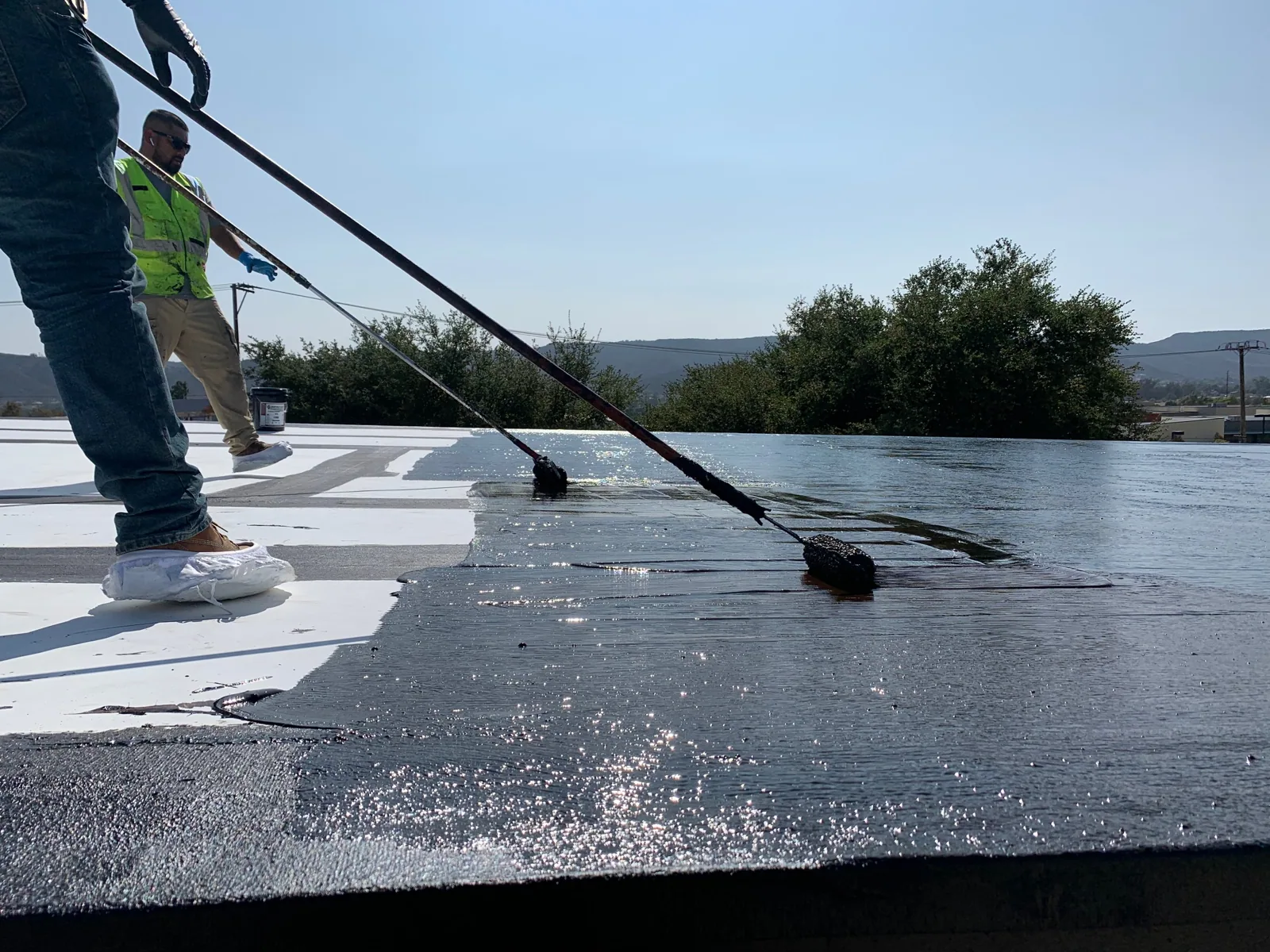
Replacement is not the only possible response to a membrane concern. A localized repair may fit a stable roof with a limited defect. Restoration may fit a sound assembly if the product maker accepts the surface and the roof remains dry. Replacement moves forward when widespread attachment problems, wet layers, deteriorated details, or repeated leaks make another patch poor value. We show the repair line and the replacement window separately so the owner can see what the current evidence supports.
After installation, maintenance should track seam edges, flashings, drains, rooftop traffic, and changes around equipment. Record repairs by roof zone and use compatible materials so a later crew can tell what was changed. A maintenance visit can identify a small open detail before it reaches insulation or interior finishes. For a roof already under strain, compare a scoped commercial roof repair with a planned commercial roof replacement. The choice should follow the inspection, not the membrane label.
Related Roofing Work
Commercial Roof Inspection
Commercial PVC Roofing
Commercial TPO Roofing
Commercial Roof Recover and Overlay
Questions About Commercial KEE Roofing
When does KEE make sense for a Richardson commercial roof?
The product earns consideration when its documented chemical-resistance profile matches the roof exposure and the full assembly suits the deck, wind design, drainage, and budget window. We confirm the exact membrane formulation rather than treating every KEE-labeled product as interchangeable.
Is KEE the same thing as PVC roofing?
KEE is a polymer used in some PVC membranes, so the terms are related but not identical. Product formulation, reinforcement, thickness, and manufacturer details still govern the specified roof. We put the named system in the scope.
Can a KEE roof go over the existing membrane?
A recover is possible only when the existing roof is dry, attached, and suitable under the project requirements. We check layers, deck condition, drainage, and edge heights before pricing it. Wet insulation or weak attachment can shift the decision to removal.
What should I compare in two KEE replacement bids?
Compare the exact membrane, insulation, cover board, attachment, flashing, edge metal, drainage work, demolition, and concealed-condition assumptions. Different assemblies can carry the same shorthand label while leaving out different work.
How do you keep a membrane project from disrupting tenants?
We divide the roof into workable zones, identify daily close-in points, and coordinate deliveries, access, noise, and interior protection with the property contact. If the building is occupied, those steps belong in the schedule and scope.
Review the KEE Scope Before Setting the Project Window
Send the roof records, exposure concerns, leak locations, and decision date. We will inspect the assembly and separate repair, recover, and replacement costs.