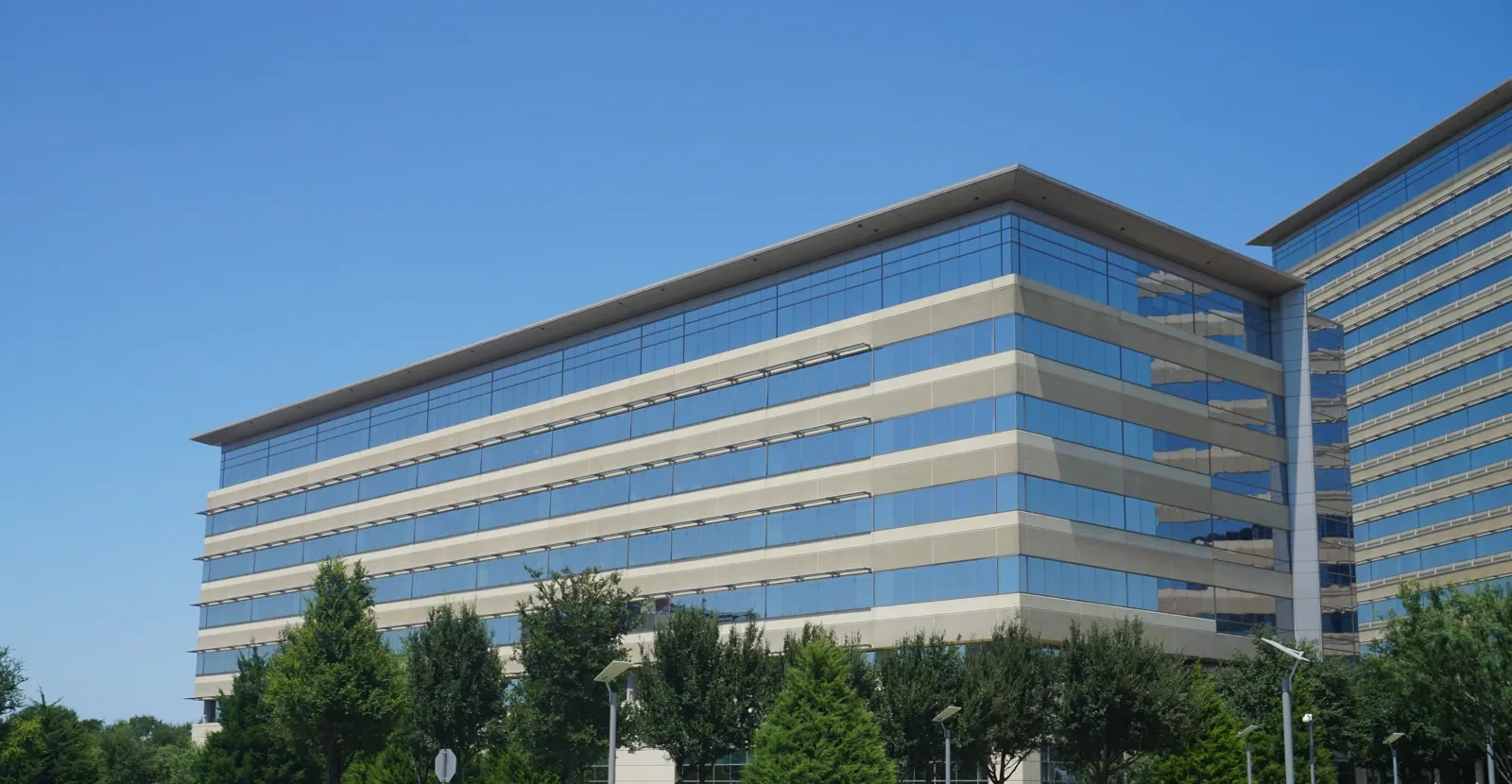
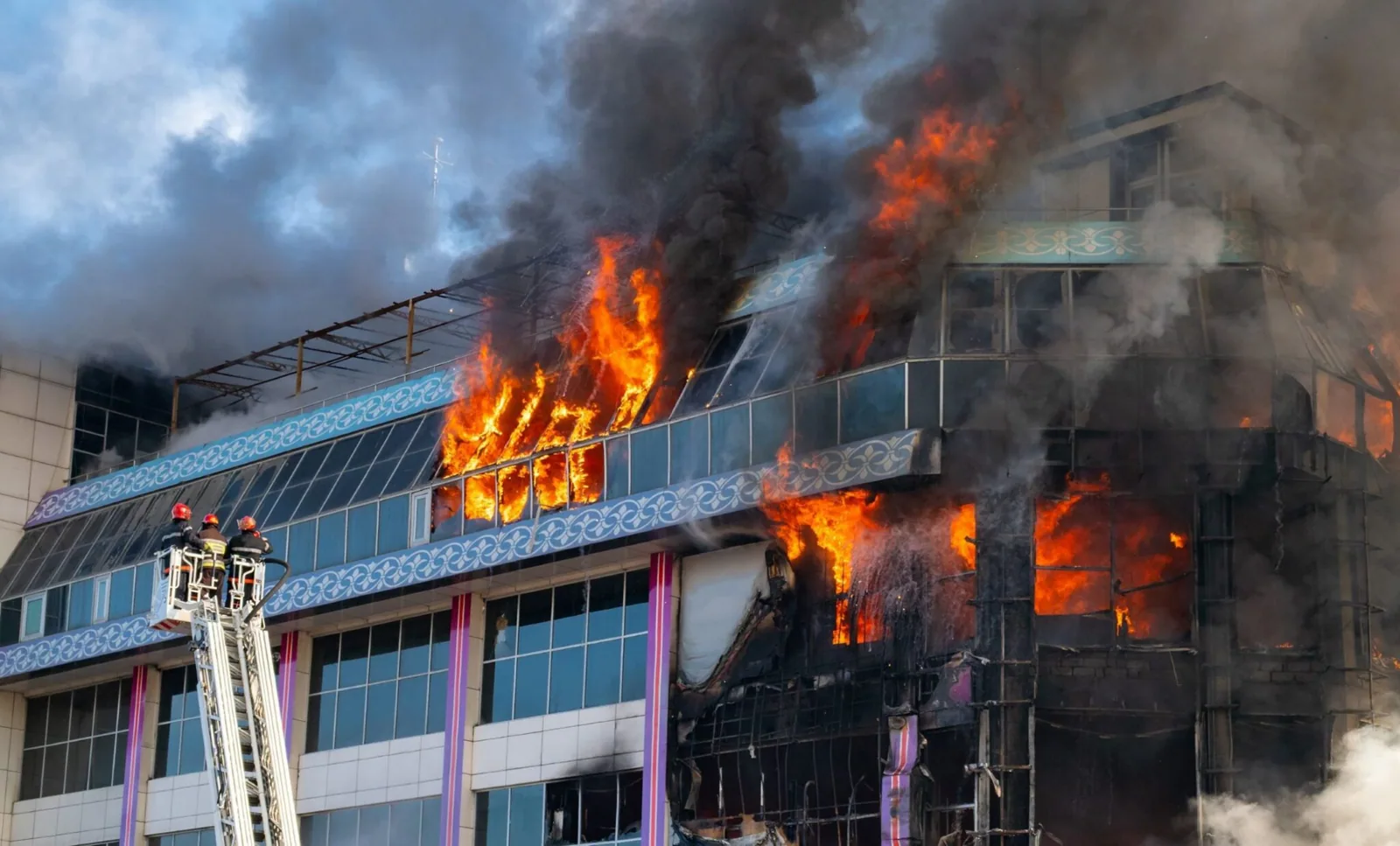
After a commercial fire, the roof may be exposed to heat, suppression water, debris, and openings made by response crews. The first roofing decision is whether the structure is safe to access and how to protect the building from weather. We inspect the roof after authorized access is confirmed, document visible conditions, and prepare a repair or replacement scope in Richardson, TX. The work stays focused on the roof assembly and its connections.
Request a Roof Assessment
All fields are required.
Commercial Fire Damage Roof Repair in Richardson, TX
Stabilize the Roof After Safe Access Is Approved
Confirm Access Before the Roof Inspection
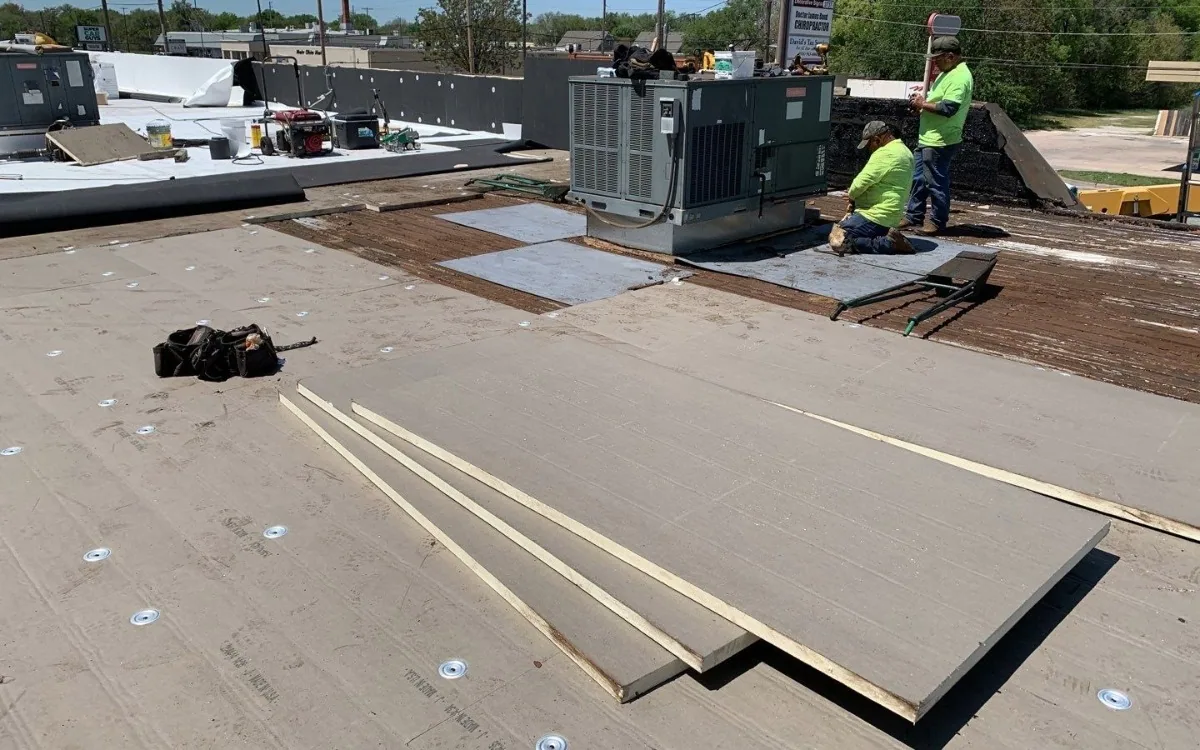
Fire response and building officials determine when the site can be entered. We coordinate with the owner and authorized site contact before going onto the roof. The inspection can then identify burned or displaced membrane, damaged insulation, exposed deck, openings, debris, and water intrusion from suppression activity. If the roof is open to weather, an emergency visit can install temporary protection once access and structural safety are established.
Access instructions can change as cleanup progresses. Confirm whether roof hatches, ladders, stairs, or loading areas remain restricted, and who can authorize a new entry window. If water protection is approved before full inspection, record what surface was covered and which areas remain open. That gives the next crew a safe starting point and prevents a temporary measure from being mistaken for completed restoration.
We document which areas were visible and any section that remains unsafe or covered by debris. Roof photos should be tied to a building zone and date, not treated as a complete structural or environmental evaluation. If the deck or supporting structure may be damaged, the owner may need a qualified engineer or fire-restoration professional to clear the area before roofing work continues. Our scope should state that dependency rather than assume the substrate is ready.
Check Heat, Water and Openings Separately
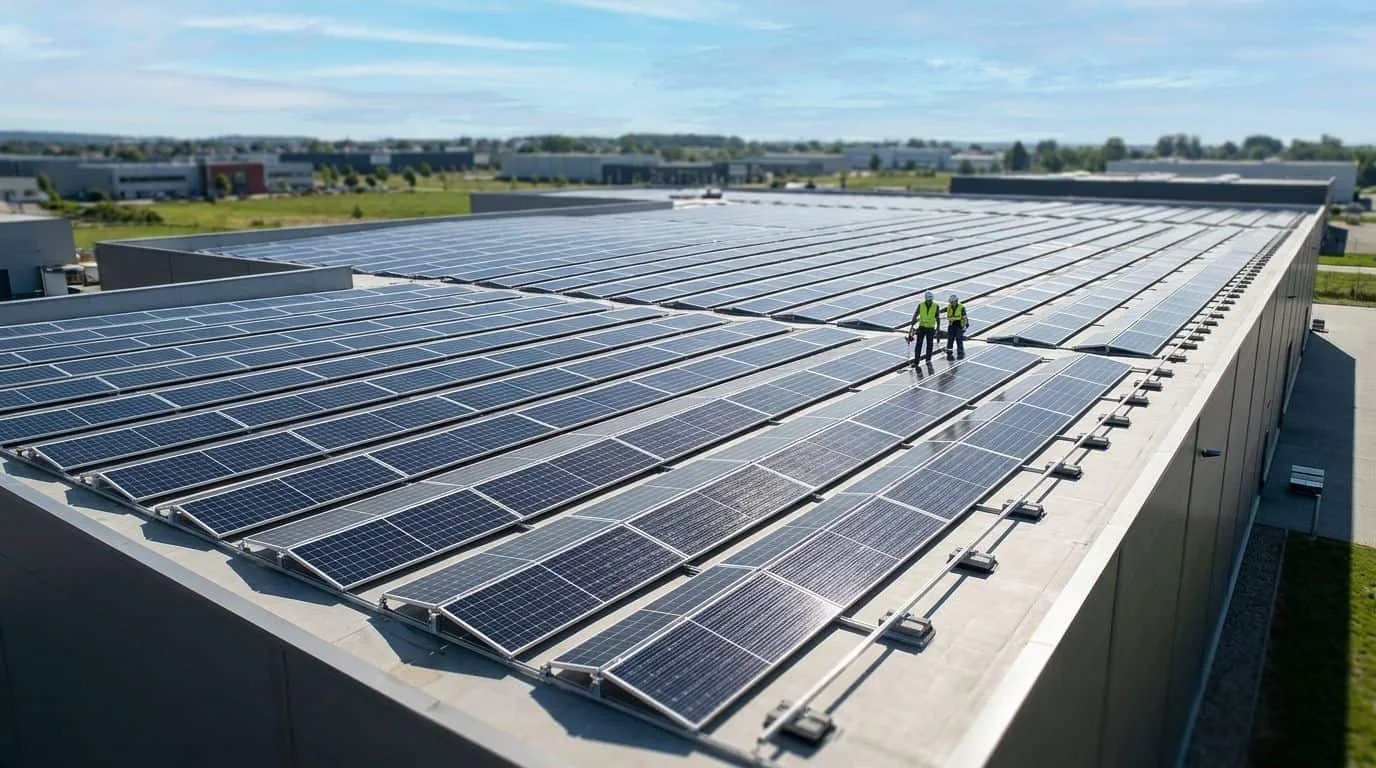
Fire-related roof damage can include membrane blistering or charring, softened insulation, displaced edge metal, punctures, and transitions opened for ventilation or access. Suppression water can reach areas outside the visible fire zone. We map each observed condition and check whether the material remains attached and serviceable. A roof inspection can record the extent of visible damage, but a test cut may be needed to assess concealed moisture under the roof surface.
Heat can affect materials beyond the visible burn mark. We inspect adjacent membrane, flashing, fasteners, and insulation for deformation, loss of attachment, or water intrusion. If a coating has changed color, that alone does not establish whether the underlying assembly is sound. The report should state what was observed and whether a probe, test cut, or additional trade evaluation is needed.
After site clearance, review the roof opening and adjacent systems: HVAC curbs, vents, conduit, skylights, parapets, and drains. A puncture or cut edge may need a membrane repair, while heat-aged flashing or sealant may require a separate correction. Do not cover debris, wet insulation, or unstable material with a patch. The estimate should distinguish temporary protection, removal, substrate replacement, and permanent roof restoration.
Keep the Scope Specific to the Richardson Property
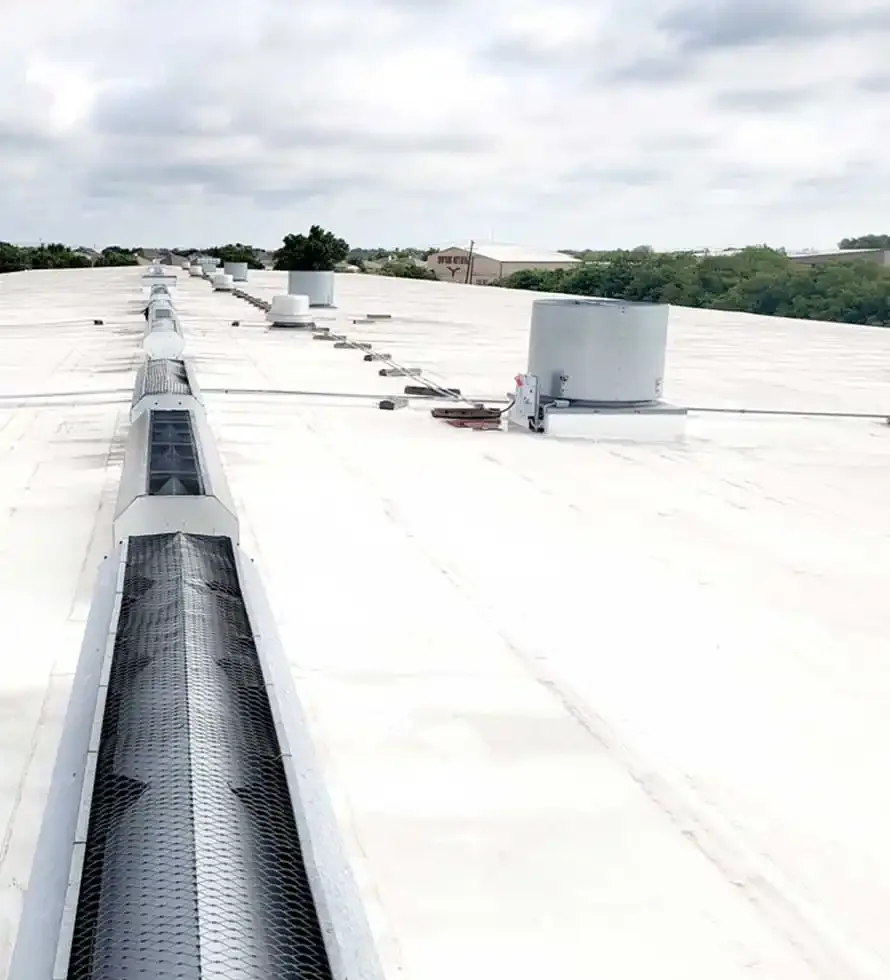
Richardson Innovation Quarter includes technology, manufacturing, education, and research organizations. Lakeside Campus contains corporate office buildings along US 75. These local commercial settings can have different equipment, access, and operating needs. They do not establish what fire occurred or what roof type a building has. A Lakeside-area facility still requires its own access approval and roof assessment. We use the building's records and observed conditions to set the repair boundary.
If the property contains manufacturing equipment, office tenants, or public access areas, the manager identifies what must remain protected during restoration. We coordinate with fire investigators and other authorized professionals when requested, but do not disturb evidence or remove material outside the roofing scope. Work should be sequenced after those approvals. A manufacturing roof plan may help frame production access questions, while the actual fire-damaged assembly requires direct inspection.
Separate Temporary Protection from Rebuilding
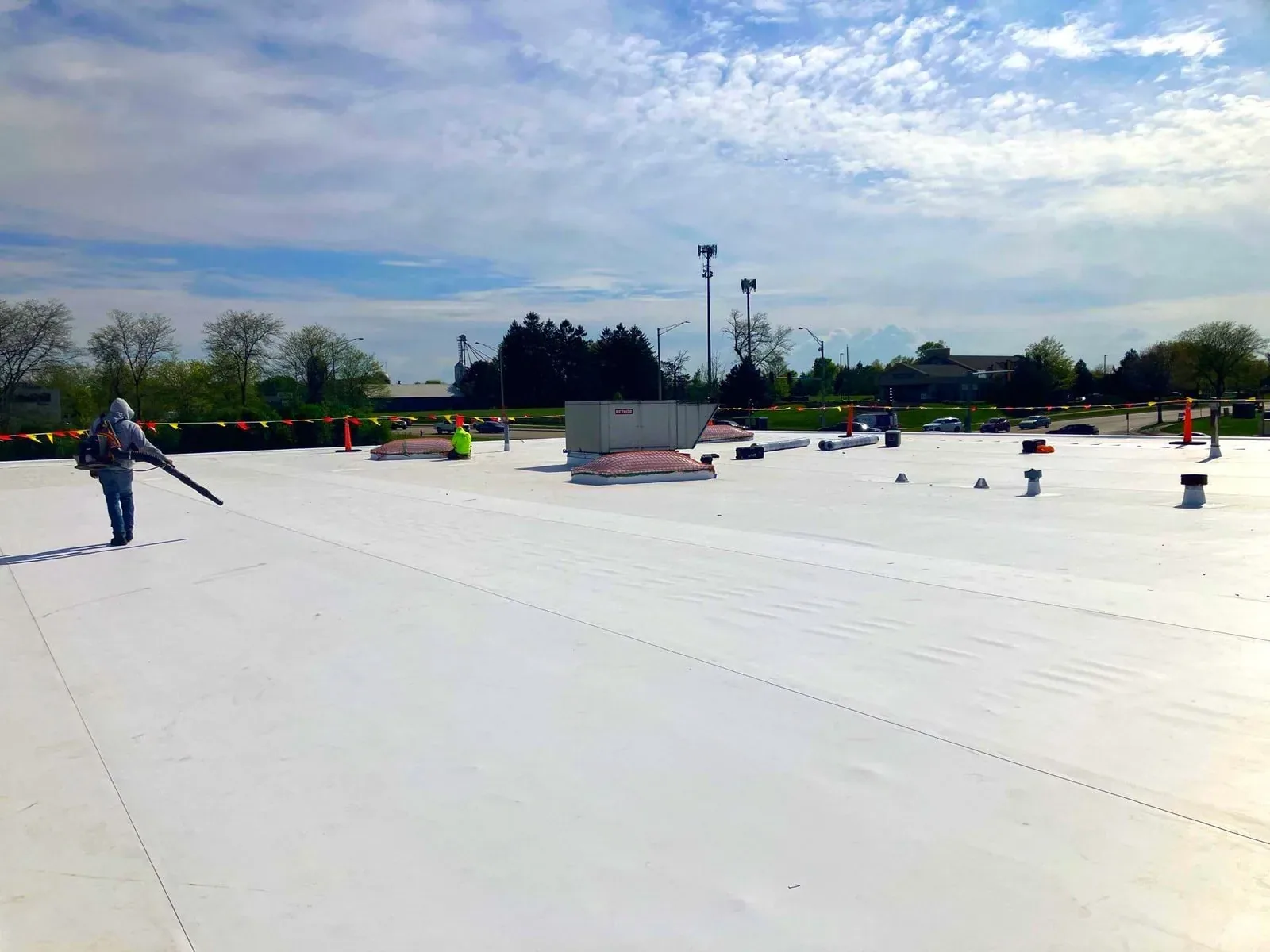
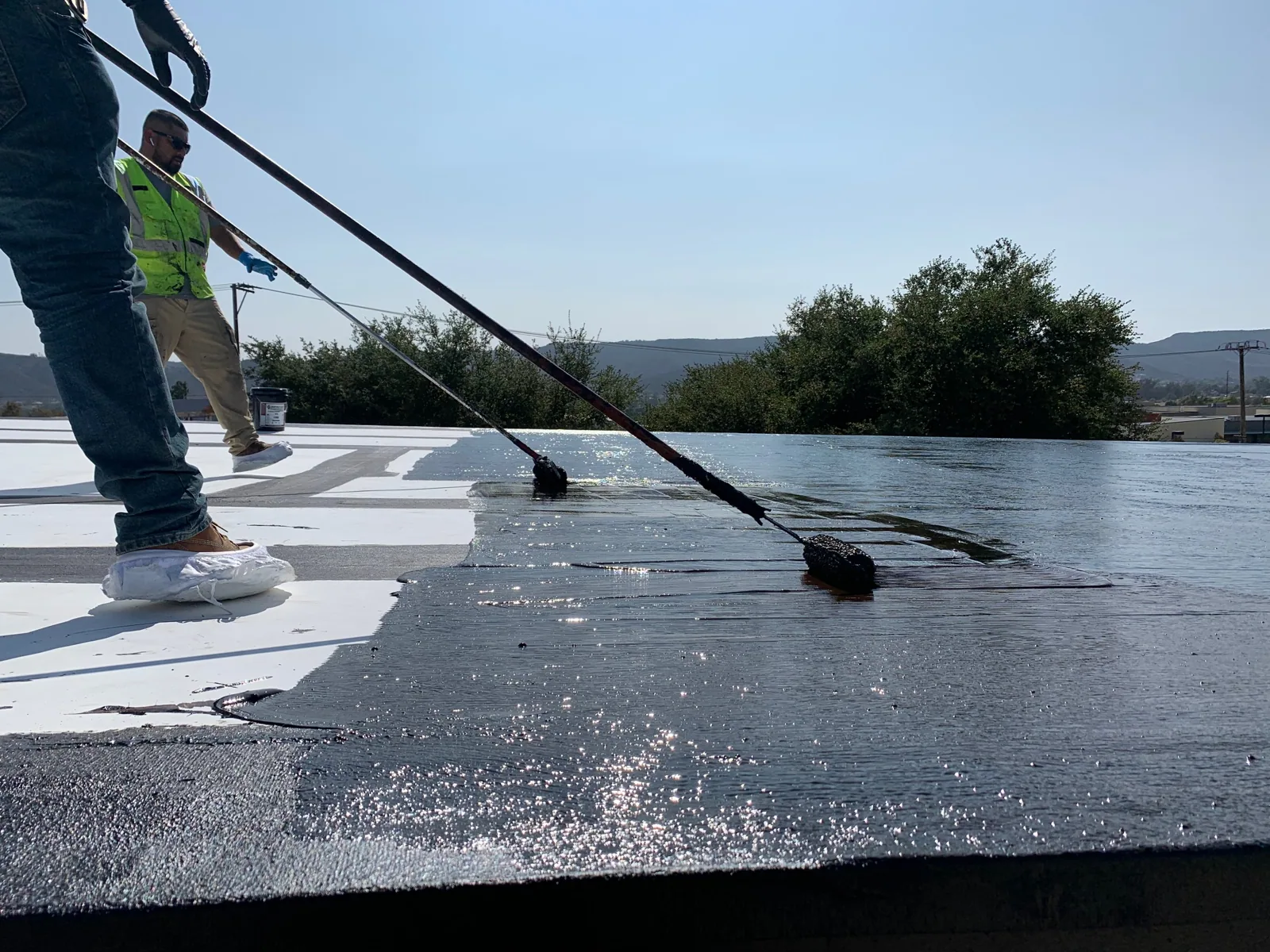
The first authorized work may be a temporary cover, edge securement, or limited patch. Permanent repair can follow after damaged layers are removed, substrate condition is established, and replacement materials are selected. We identify what remains exposed after the first visit and how weather will be managed until restoration starts. A replacement scope can define tear-off, deck assumptions, insulation, membrane, edge metal, equipment coordination, and daily close-in. Local permit requirements depend on the work and are confirmed before procurement.
Before permanent work, agree on the boundary between demolition and rebuilding. Identify how the crew will protect the opening overnight, where debris can be staged, and what happens if a second damaged layer appears. The owner can then authorize a measured extension instead of accepting an undefined allowance. A daily field update should state whether the roof is closed or which section remains under temporary protection.
City requirements include locally amended 2021 building and energy provisions. Because fire restoration can change insulation or assembly, we establish which review applies before installation. Cost drivers include restricted access, debris handling, temporary protection, test openings, replacement of wet material, and work phasing. We price each confirmed item separately. A small unaffected roof zone should not automatically be included in the fire scope; we document its condition separately so the owner can decide whether to repair or maintain it.
Record the Restored Assembly and Remaining Work
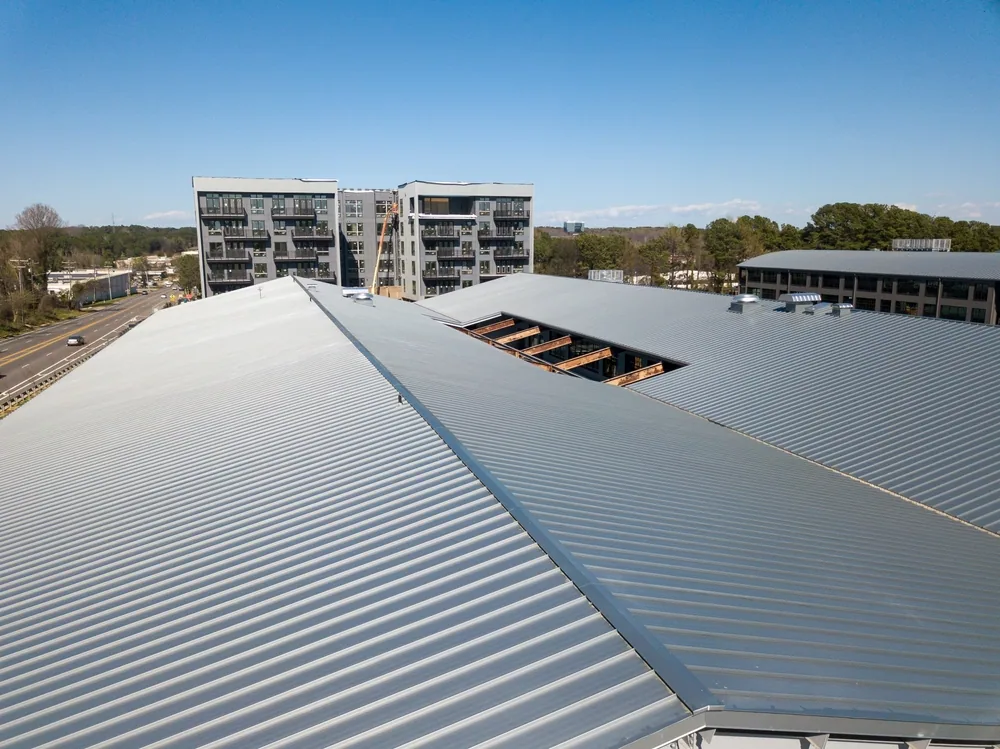
Closeout should list material removed, substrate replaced, roof system installed, transitions completed, dated photos, and any area still awaiting another professional's clearance. We identify inspections performed and what was not visible. A maintenance inspection can check the repaired zone and nearby drains after work is complete. The report should help a new facilities lead understand what the roofing crew corrected and what remains outside its scope. Give facilities a copy of the final roof plan.
If another inspection is required after cleanup, note the party arranging it and what access conditions must be met. The roof file should preserve unresolved items separately from completed repairs, with photos and dates tied to each zone.
Richardson's July and August heat can stress exposed sealants and flashing, so review those details during the closeout walk. Any later HVAC or electrical work should be coordinated before another trade penetrates the restored roof. If heat exposure affected neighboring material, a heat-damage assessment can document that area separately. Keep the fire repair file with suppression, cleanup, and building records while maintaining a clear roofing scope.
Related Roofing Work
Emergency Commercial Roof Repair
Commercial Roof Inspection
Commercial Membrane Puncture Repair
Richardson
Questions About Commercial Fire Damage Roof Repair
Can a roofer inspect a building before it is cleared after a fire?
No. The owner and authorized officials must confirm the site and roof are safe to access. We schedule the inspection after clearance and identify areas that remain restricted.
What should a fire-damage roof inspection document?
Record visible heat effects, openings, displaced details, wet material, access limits, and photos by roof zone. State what could not be inspected and whether testing or structural review is needed.
Should temporary protection be installed before permanent repairs?
If the roof is exposed and access is safe, temporary protection can limit new water entry. We document that work separately and set the next inspection or restoration decision.
Does a fire-damaged roof always need full replacement?
Not always. The decision depends on the extent of heat damage, wet or unstable layers, attachment, deck condition, and openings. We map the affected areas before pricing the permanent scope.
Can the roofing contractor handle smoke cleanup inside?
Our scope covers roof assembly and related exterior details. Interior smoke cleanup, contents, and environmental work belong to the qualified restoration team selected by the owner.
Stabilize the Roof After Safe Access Is Approved
Share the clearance status, building contact, observed openings, and weather exposure. We will inspect the accessible roof and prepare temporary and permanent work scopes.